


Mo 68A
Einplatinencomputer
Flaggschiff-Open-Source-KI-SBC mit 8 TOPS für Edge-Inferenz mittlerer bis hoher Komplexität, einschließlich Robotik und industrieller Bildverarbeitung.
Mo 68A
Einplatinencomputer
Flaggschiff-Open-Source-KI-SBC mit 8 TOPS für Edge-Inferenz mittlerer bis hoher Komplexität, einschließlich Robotik und industrieller Bildverarbeitung.
FOTO
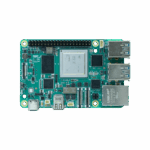
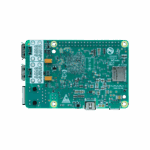
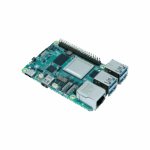
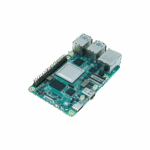
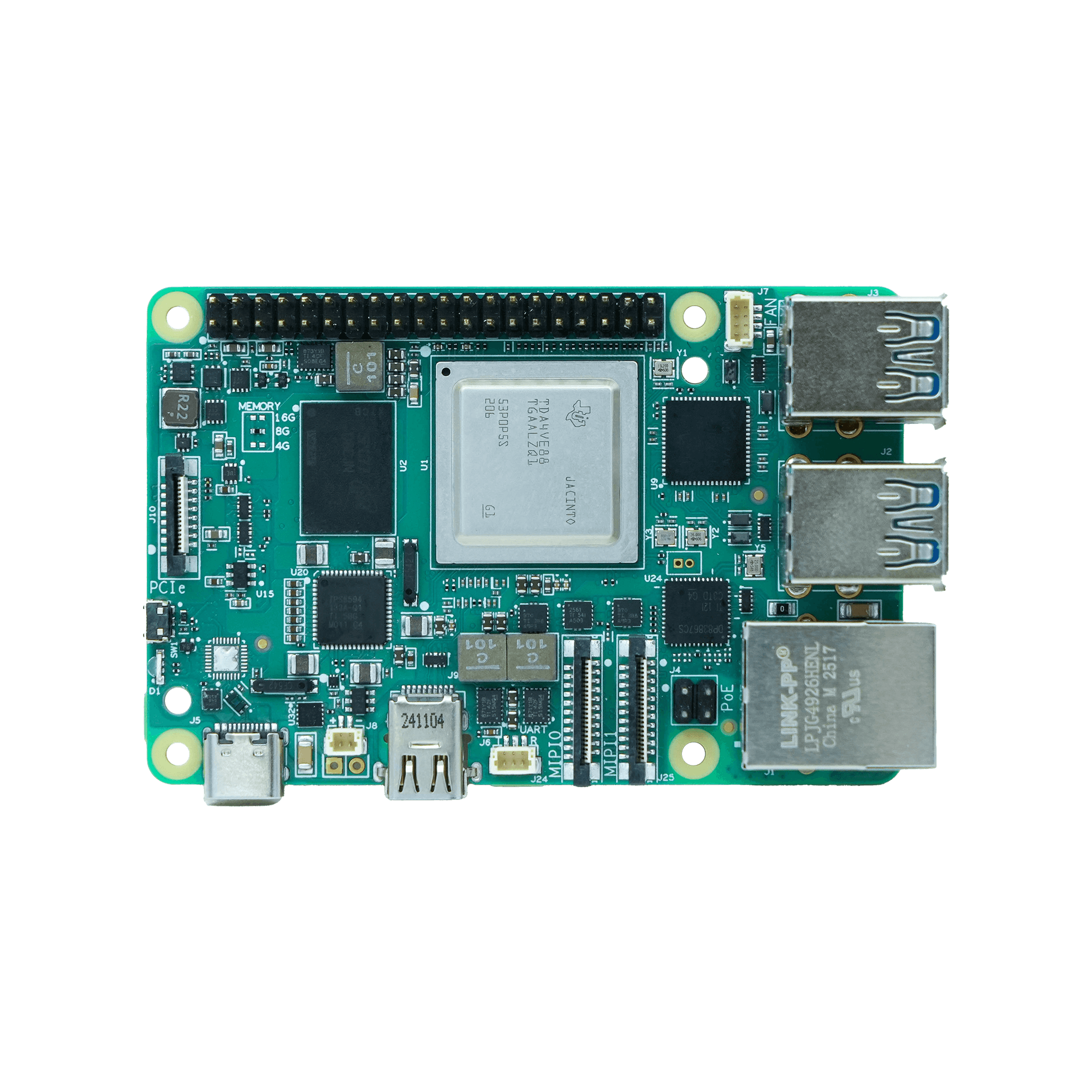
8 TOPS Flagship Open-Source AI SBC

Hochleistungsprozessor
Ausgestattet mit dem KI-Vision-Prozessor AM68A von Texas Instruments, der über eine Dual-Core 64-Bit Arm® Cortex®-A72 CPU mit bis zu 2,0 GHz verfügt.

KI-Beschleunigung
Ausgestattet mit C7x DSPs und Matrix-Multiplikationsbeschleunigern (MMAs) liefert es eine Deep-Learning-Leistung von bis zu 8 TOPS.

Umfangreiche Konnektivität
Hochgeschwindigkeits-PCIe 3.0 und USB 3.0 sowie flexible Multimedia-Ein-/Ausgänge für kostengünstige Systeme mit mehreren Kameras und Bildschirmen.

Schnelles Prototyping
Ein 40-poliger Erweiterungsstecker ermöglicht lötfreies Prototyping und breite Kompatibilität mit Sensoren, Aktoren und Verbindungszubehör.
Hochleistungsprozessor
Ausgestattet mit dem KI-Vision-Prozessor AM68A von Texas Instruments, der über eine Dual-Core 64-Bit Arm® Cortex®-A72 CPU mit bis zu 2,0 GHz verfügt.
KI-Beschleunigung
Ausgestattet mit C7x DSPs und Matrix-Multiplikationsbeschleunigern (MMAs) liefert es eine Deep-Learning-Leistung von bis zu 8 TOPS.
Umfangreiche Konnektivität
Hochgeschwindigkeits-PCIe 3.0 und USB 3.0 sowie flexible Multimedia-Ein-/Ausgänge für kostengünstige Systeme mit mehreren Kameras und Bildschirmen.
Schnelles Prototyping
Ein 40-poliger Erweiterungsstecker ermöglicht lötfreies Prototyping und breite Kompatibilität mit Sensoren, Aktoren und Verbindungszubehör.
-
Technische Kernspezifikationen
KI-Beschleuniger 2 x C7 x DSP + Deep Learning Accelerator, 8 TOPSKI-Laufzeit TI TIDL, unterstützt TFLite / ONNXCPU 2 × Cortex-A72 @ 2,0 GHzEntwicklung Python, C/C++, OpenCV, GStreamerAbmessungen (B × T × H) 85 × 56 mm (3.35 × 2.2 in)Schnittstelle 1 × GbE, 4 × USB 3.0, PCIe 3.0, Mini DP, MIPI DSI/CSI-2Betriebstemperatur 0 °C ~ +50 °C (32 °F ~ +122 °F)Betriebssystem Debian 13 (Embedded Linux)Leistung USB Typ-C 5 V / 5 A DC; ≤ 25 WRAM LPDDR4 4 GB / 8 GB (Standard)Sicherheit Secure Boot, TrustZone, OP-TEE, Hardware AES-256Vision VPAC, DMPAC, 4K@60fps H.265 / H.264 Codec
-
Hardwareplattform
KI-Beschleuniger 2 x C7 x DSP + Deep Learning Accelerator, 8 TOPSCPU TI AM68A, 2 × Cortex-A72 @ 2,0 GHzISP / Vision On-Chip-ISP + VPAC (RGB-IR, WDR, LDC)RAM LPDDR4 4 GB / 8 GB (Standard)
-
Schnittstelle
40-poliger Stecker GPIO / I²C / I²S / SPI / UART / PCM, HAT-kompatibelAudio I²S über 40-poligen SteckerTaste 1 × Reset-TasteKamera bis zu 2 × 4-spurige MIPI CSI-2Debuggen 1 × TTL UARTAnzeige 1 × Mini-DP + bis zu 2 × 4-Lane MIPI DSIEthernet 1 × Gigabit-EthernetLüfteranschluss 1 × 4-poliger Lüfteranschluss (5 V, PWM, GND, TACH)LED PWR, STATUSPCIe 1 × PCIe 3.0Lagerung microSDUSB 4 × USB 3.0 Typ-A
-
Leistung
Stromverbrauch 25 W (MAX)Stromzufuhr USB Typ-C 5 V / 5 A Gleichstrom
-
Mechanisch
Kühlung Aktiver Lüfter (optional)Abmessungen (B × T × H) 85 × 56 mm (3.35 × 2.2 in)Gehäuse LeiterplatteRTC Unterstützung (Akku-Backup)Gewicht 53 g (0.12 lb)
-
Umwelt
Betriebstemperatur 0 °C ~ +50 °C (32 °F ~ +122 °F)Lagertemperatur -20 °C ~ +70 °C (-4 °F ~ +158 °F)
-
Betriebssystem
Kernel Linux-Kernel 6.12Betriebssystem Debian 13 Trixie
-
KI & Vision
KI-Laufzeit TI TIDL, unterstützt TFLite / ONNXKamera-Framework V4L2Anzeige-Framework DRM / KMSVision SDK TI EdgeAI SDK
-
Netzwerkfunktionen
IP-Anwendung TCP/UDP, ICMP, DNS, DHCPIP-Routing Statisches Routing
-
Sicherheit
Krypto-Beschleuniger Hardware AES-256OP-TEE UnterstützungSicherer Boot UnterstützungTrustZone Unterstützung
-
Entwicklung
Sprachen Python, C/C++Bibliotheken OpenCV, GStreamer, NumPyOpen SDK Unterstützt kundenspezifische Systemkonfigurationen.Paketmanager apt (Debian)
-
Systemverwaltung
Debuggen UART-KonsoleFirmware-Upgrade SD-Karten-FlashFernzugriff SSH
Standardpaket*
- Mo 68A AI Single Board Computer *1
Optionales Zubehör
- Netzteil *1
- Wi-Fi-Antenne *1
- RTC-Batterie *1
- TTL-Debug-Seriellkabel *1
- Ventilator *1
- Ethernet-Kabel *1
- 32-GB-SD-Karte *1
- Micro-HDMI auf HDMI (MO 62A) *1
- Mini DP auf DP (MO 68A) *1
* Der Standardpaketinhalt variiert je nach Standardbestellcode.
Kontaktieren Sie uns Um mehr über unsere Verpackungsoptionen zu erfahren, wenden Sie sich bitte direkt an uns.
Spezifikationen
-
Technische Kernspezifikationen
KI-Beschleuniger 2 x C7 x DSP + Deep Learning Accelerator, 8 TOPSKI-Laufzeit TI TIDL, unterstützt TFLite / ONNXCPU 2 × Cortex-A72 @ 2,0 GHzEntwicklung Python, C/C++, OpenCV, GStreamerAbmessungen (B × T × H) 85 × 56 mm (3.35 × 2.2 in)Schnittstelle 1 × GbE, 4 × USB 3.0, PCIe 3.0, Mini DP, MIPI DSI/CSI-2Betriebstemperatur 0 °C ~ +50 °C (32 °F ~ +122 °F)Betriebssystem Debian 13 (Embedded Linux)Leistung USB Typ-C 5 V / 5 A DC; ≤ 25 WRAM LPDDR4 4 GB / 8 GB (Standard)Sicherheit Secure Boot, TrustZone, OP-TEE, Hardware AES-256Vision VPAC, DMPAC, 4K@60fps H.265 / H.264 Codec
-
Hardwareplattform
KI-Beschleuniger 2 x C7 x DSP + Deep Learning Accelerator, 8 TOPSCPU TI AM68A, 2 × Cortex-A72 @ 2,0 GHzISP / Vision On-Chip-ISP + VPAC (RGB-IR, WDR, LDC)RAM LPDDR4 4 GB / 8 GB (Standard)
-
Schnittstelle
40-poliger Stecker GPIO / I²C / I²S / SPI / UART / PCM, HAT-kompatibelAudio I²S über 40-poligen SteckerTaste 1 × Reset-TasteKamera bis zu 2 × 4-spurige MIPI CSI-2Debuggen 1 × TTL UARTAnzeige 1 × Mini-DP + bis zu 2 × 4-Lane MIPI DSIEthernet 1 × Gigabit-EthernetLüfteranschluss 1 × 4-poliger Lüfteranschluss (5 V, PWM, GND, TACH)LED PWR, STATUSPCIe 1 × PCIe 3.0Lagerung microSDUSB 4 × USB 3.0 Typ-A
-
Leistung
Stromverbrauch 25 W (MAX)Stromzufuhr USB Typ-C 5 V / 5 A Gleichstrom
-
Mechanisch
Kühlung Aktiver Lüfter (optional)Abmessungen (B × T × H) 85 × 56 mm (3.35 × 2.2 in)Gehäuse LeiterplatteRTC Unterstützung (Akku-Backup)Gewicht 53 g (0.12 lb)
-
Umwelt
Betriebstemperatur 0 °C ~ +50 °C (32 °F ~ +122 °F)Lagertemperatur -20 °C ~ +70 °C (-4 °F ~ +158 °F)
-
Betriebssystem
Kernel Linux-Kernel 6.12Betriebssystem Debian 13 Trixie
-
KI & Vision
KI-Laufzeit TI TIDL, unterstützt TFLite / ONNXKamera-Framework V4L2Anzeige-Framework DRM / KMSVision SDK TI EdgeAI SDK
-
Netzwerkfunktionen
IP-Anwendung TCP/UDP, ICMP, DNS, DHCPIP-Routing Statisches Routing
-
Sicherheit
Krypto-Beschleuniger Hardware AES-256OP-TEE UnterstützungSicherer Boot UnterstützungTrustZone Unterstützung
-
Entwicklung
Sprachen Python, C/C++Bibliotheken OpenCV, GStreamer, NumPyOpen SDK Unterstützt kundenspezifische Systemkonfigurationen.Paketmanager apt (Debian)
-
Systemverwaltung
Debuggen UART-KonsoleFirmware-Upgrade SD-Karten-FlashFernzugriff SSH
Downloads
Bestellung
Standardpaket*
- Mo 68A AI Single Board Computer *1
Optionales Zubehör
- Netzteil *1
- Wi-Fi-Antenne *1
- RTC-Batterie *1
- TTL-Debug-Seriellkabel *1
- Ventilator *1
- Ethernet-Kabel *1
- 32-GB-SD-Karte *1
- Micro-HDMI auf HDMI (MO 62A) *1
- Mini DP auf DP (MO 68A) *1
* Der Standardpaketinhalt variiert je nach Standardbestellcode.
Kontaktieren Sie uns Um mehr über unsere Verpackungsoptionen zu erfahren, wenden Sie sich bitte direkt an uns.
DeviceLive
IoT-Geräteverwaltungsplattform
Gerätemanagement, Fernüberwachung, Edge-App-Management und Fernwartung helfen Industrieunternehmen beim Aufbau intelligenter Edge-Netzwerke.
DeviceLive
Ähnliche Fälle
Kompakte KI-gestützte visuelle Inspektionssysteme
Entwicklung kompakter KI-gestützter Systeme für die visuelle Inspektion: Anwendungen und Anwendungsfälle – Wichtigste Erkenntnisse – Beschleunigung…
Mehr erfahren →
Umwandlung von Videos vom Straßenrand in verwertbare Verkehrsdaten
Nutzung von Videoaufnahmen vom Straßenrand zu verwertbaren Verkehrsdatenanwendungen und Fallstudien – Wichtigste Erkenntnisse…
Mehr erfahren →
Intelligente Baustellenüberwachung am Rande
Intelligente Baustellenüberwachung am Netzwerkrand: Anwendungen und Fallstudien – Wichtigste Erkenntnisse – Verbesserung…
Mehr erfahren →Häufig gestellte Fragen
Was bietet der MO-68A?
Der MO-68A ist ein 8-TOPS-KI-Einplatinencomputer für die geräteinterne Bildverarbeitung am Edge, der auf dem TI AM68A SoC (TDA4VE / J721S2-Familie). Wichtigste Spezifikationen:
| — | — |
| Berechnen | 2× Cortex-A72 @ 2,0 GHz + 2× C7x DSP + 8-TOPS Deep Learning Accelerator |
| Vision-Pipeline | On-Chip-ISP + VPAC (RGB-IR, WDR, LDC) + DMPAC (Tiefe und Bewegung); bis zu 2× 4-spurige MIPI CSI-2 |
| RAM | LPDDR4, 4 GB / 8 GB (Standard) SKUs ( MO-68A-4G/-8G ) |
| Betriebssystem | Armbian (basierend auf Debian) |
| Konnektivität | 1× Gigabit-Ethernet |
| Andere E/A | 4× USB 3.0 Typ A, 1× PCIe 3.0, 1× Mini-DisplayPort (oder bis zu 2× MIPI DSI), 40-poliger HAT-kompatibler Header, microSD |
| Sicherheit | Secure Boot, ARM TrustZone, OP-TEE, Hardware-AES-256 |
| Leistung / Größe | USB Typ-C 5 V/5 A (max. 25 W), 85 × 56 mm, 53 g — Aktiver Lüfter erforderlich |
Das 85 × 56 mm große Board und das 40-Pin-HAT-kompatible Layout sind mechanisch kompatibel mit gängigen SBC-Ökosystemen. Typische Anwendungen: KI-Vision-Systeme, intelligente Kameras, Edge-KI-Terminals, intelligente Fertigung, Smart City, Smart Energy, Smart Healthcare, öffentliche Versorgungsunternehmen. Der MO-68A ist ein entwicklerorientierter SBC, der über SSH und Standard-Debian/Armbian-Tools verwaltet wird. nicht Führen Sie InHand IEOS oder DeviceLive aus.
Wie flashe und starte ich den MO-68A zum ersten Mal?
- Flashen Sie die SD-Karte — Laden Sie das Armbian-Image MO68A von der InHand-Website herunter. Verwenden Sie Armbian Imager (das empfohlene Flash-Tool – *nicht* balenaEtcher), um das Image auf eine ≥16 GB Klasse 10 / UHS-I microSD-Karte. Auswählen Benutzerdefiniertes Bild verwendenWählen Sie den Speicher sorgfältig aus, dann Löschen & Flashen.
- Peripheriegeräte anschließen in der Reihenfolge – zuerst der Lüfter (4-Pin PWM an J7, erforderlich für das Wärmemanagement), dann SD-Karte (J23), dann optional eine Mini-DisplayPort Monitor (J9) und USB-Tastatur/Maus für die Desktop-Nutzung, dann RJ45 Ethernet (J1).
- Schalten Sie zuletzt Strom ein. — USB-C 5 V/5 A Bei J5 leuchtet die Status-LED (D1). Rot sofort, dann dreht er sich einfarbig grün wenn das Betriebssystem läuft. Normaler Startvorgang ≈ 30–45 s; die Der erste Startvorgang dauert 1–2 Minuten länger. Währenddessen wird das Root-Dateisystem so erweitert, dass es die gesamte SD-Karte ausfüllt. Anschließend startet das Board einmal automatisch neu.
- Erste Anmeldung — Standardanmeldeinformationen
Wurzel/1234Anschließend führt Armbian einen einmaligen Initialisierungsassistenten für Gebietsschema, Zeitzone und die Erstellung eines regulären Benutzerkontos aus.
Im Headless-Modus verwendet das Board DHCP. eth0 Standardmäßig; SSH-Anmeldung mit dem im Assistenten erstellten Benutzerkonto. Ein 3-poliger TTL-UART-Debug-Header ist ebenfalls an J6 (115200 Baud, 8N1) vorhanden. Nur 3,3-V-Logik; ein 5-V-Netzteil beschädigt die Platine..
> Hinweis zur Anzeige: Der Mini-DisplayPort-Ausgang benötigt einen Monitor mit nativem DP-Eingang. Passive Mini-DP-zu-HDMI-Adapter tun dies. nicht Für die Arbeit – verwenden Sie einen aktiven Adapter oder einen Monitor mit nativem DP-Anschluss.
Wie führe ich KI-Modelle auf dem MO-68A aus?
Der 8-TOPS Deep Learning Accelerator und 2× C7x DSPs führen Modelle über die TI Deep Learning (TIDL) Laufzeitumgebung, die akzeptiert TFLite ( .tflite ) Und ONNX ( .onnx ) Modelle. Der integrierte ISP/VPAC übernimmt die RAW→RGB-Konvertierung, WDR und Objektivkorrektur; die DMPAC Der Tiefen- und Bewegungsbeschleuniger erweitert die Stereo- und Mehrkamera-Bildverarbeitung um Tiefenwahrnehmung und Bewegungsschätzung. Die Vor- und Nachbearbeitung erfolgt in Python oder C/C++ üblicherweise mit OpenCV und GStreamer. Das TI EdgeAI SDK und die Linux-Frameworks (V4L2 für die Kamera, DRM/KMS für das Display) sind im mitgelieferten Armbian-Image enthalten.
Mit 8 TOPS – dem Vierfachen des MO-62A – eignet sich der MO-68A für On-Device-Inferenz mit höherem Durchsatz: Stereotiefenmessung, Szenenverständnis mit mehreren Kameras, größere Objekterkennungsmodelle, OCR mit höheren Bildraten und kombinierte Bild- und Bewegungsanalyse.
Wie schneidet das MO-68A im Vergleich zum MO-62A ab?
| MO-62A | MO-68A | |
| — | — | — |
| Betriebssystem | Debian Linux | Armbian (basierend auf Debian) |
| SoC | TI AM62A74 | TI AM68A (TDA4VE / J721S2 Familie) |
| CPU | 4× Cortex-A53 @ 1,4 GHz | 2× Cortex-A72 @ 2,0 GHz |
| KI-Berechnung | 2 TOPS (1× C7x DSP + DLA) | 8 TOPS (2× C7x DSP + DLA + DMPAC) |
| RAM | 2 / 4 (Standard) / 8 GB | 4 / 8 GB (Standard) |
| USB | 4× USB 2.0 | 4× USB 3.0 |
| PCIe | — | 1× PCIe 3.0 |
| Anzeige | Micro-HDMI | Mini-DisplayPort |
| MIPI | 1× CSI-2 | bis zu 2× CSI-2 / DSI (umschaltbar) |
| Kühlung | Aktiver Lüfter optional | Aktiver Lüfter erforderlich |
| Gewicht | 47 g | 53 g |
Wähle die MO-62A für kostengünstigere 2-TOPS Edge AI auf einem lüfterlosen oder optionalen Mainboard mit passiver Kühlung und HDMI-Displayausgang. Wählen Sie die MO-68A wenn die Anwendung die 4-fache KI-Rechenleistung benötigt (Stereo-Tiefe, Multi-Kamera, größere Modelle), schnellere USB 3.0 / PCIe 3.0-Erweiterung, zwei MIPI-Anschlüsse oder DMPAC-beschleunigte Tiefen-/Bewegungsverarbeitung.
—