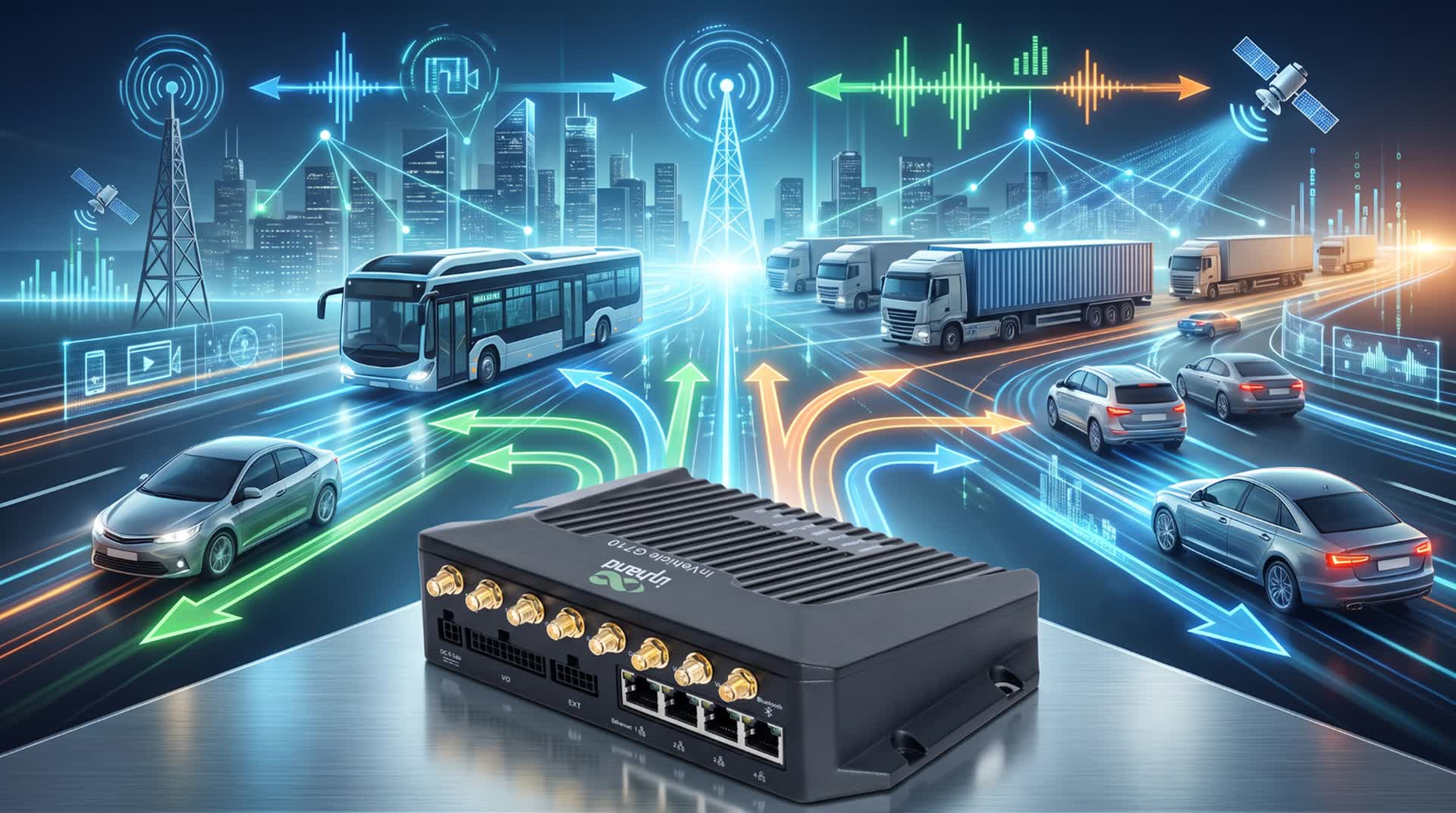
From Connected Vehicles to Intelligent Mobility: Why Vehicle Gateways Are Becoming the Digital Backbone of Transportation
Blog
The evolution of vehicle connectivity is reshaping transportation systems
For years, vehicle connectivity was mainly about keeping vehicles online.
Fleet operators used cellular networks and GPS tracking to monitor vehicle locations, collect basic operational data, and improve management efficiency. This approach helped transportation companies move from manual operations toward digital fleet management.
However, as intelligent transportation continues to evolve, vehicles are becoming much more than simple mobile assets.
Modern vehicles are now equipped with increasing numbers of onboard systems, including cameras, sensors, diagnostic devices, passenger information systems, and control terminals. These devices continuously generate large amounts of data that require reliable transmission, efficient processing, and intelligent management.
The challenge is no longer simply connecting vehicles to the network.
The real question is:
How can transportation systems build a reliable digital foundation that enables vehicles to sense, communicate, and make faster decisions?
This shift is driving the transformation of vehicle gateways from traditional communication devices into intelligent edge platforms.
Why traditional vehicle networking is no longer enough
In early vehicle networking applications, a router or modem was often sufficient.
The primary responsibility was straightforward:
Connect the vehicle to the internet and transfer data to the cloud.
But today’s transportation scenarios are much more complex.
A single vehicle may need to support multiple applications simultaneously:
Real-time video transmission
Fahrzeugdiagnose
Fleet monitoring
Location tracking
Remote maintenance
Passenger service systems
Edge-based applications
Each application has different requirements. Video services require high bandwidth. Vehicle control data requires reliability. Operational data requires real-time collection. Management systems require secure remote access.
When these applications operate together, connectivity becomes more than a simple network problem. It becomes an integrated challenge involving communication, data acquisition, computing, and security.
5G is accelerating vehicle intelligence, but connectivity alone is not enough
The introduction of 5G brings significant improvements to vehicle communication.
Higher bandwidth and lower latency create new possibilities for smart transportation applications.
However, 5G itself does not solve every challenge.
A vehicle operates in constantly changing environments. Signal conditions vary as vehicles move between different areas, and onboard systems from different manufacturers often require different communication methods.
Therefore, future vehicle connectivity requires more than fast wireless communication.
It requires a platform that can:
Maintain stable network connections
Integrate different vehicle devices
Process data closer to the source
Support secure communication between vehicles and cloud platforms
This is why vehicle gateways are becoming a critical component in intelligent transportation architectures.
Moving intelligence closer to the vehicle with edge computing
As the amount of vehicle-generated data continues to grow, sending all information directly to the cloud is not always the most efficient approach.
For many applications, immediate response is essential.
Vehicle status monitoring, local data analysis, and operational decisions often require processing closer to where data is generated. Edge computing provides a solution by introducing local intelligence between vehicles and cloud platforms.
Instead of relying entirely on remote servers, edge-enabled gateways can process and manage data locally before sending necessary information to the cloud.
This approach helps transportation systems achieve:
Faster response times
Reduced network traffic
Improved operational efficiency
More flexible application deployment
The vehicle gateway is therefore evolving into a distributed computing node rather than simply a communication bridge.
Building a flexible connectivity platform for intelligent vehicles
To support modern transportation applications, a vehicle gateway needs to combine communication capabilities with industrial-grade reliability.
Unlike consumer networking equipment, vehicle gateways must operate in challenging environments where vibration, temperature variations, and continuous operation are common.
They also need to support various vehicle interfaces to connect with different onboard systems. A flexible architecture allows transportation operators to integrate existing equipment while preparing for future digital applications.
This requires:
Reliable cellular connectivity
Multiple wired interfaces
Vehicle data acquisition capability
Secure remote management
Programmable edge applications
Together, these capabilities create the foundation for smarter mobility.
VG710: Enabling reliable and intelligent vehicle connectivity
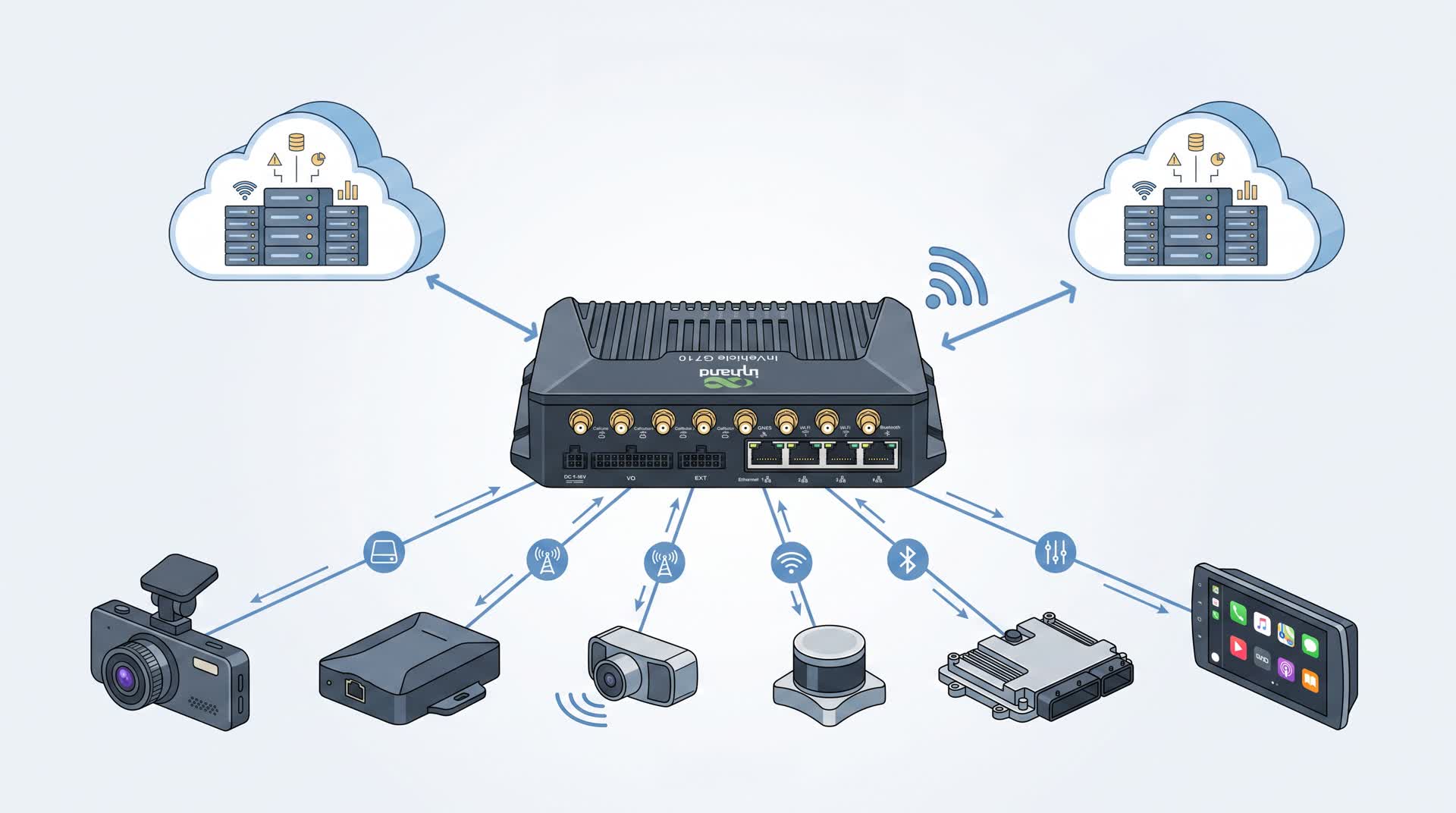
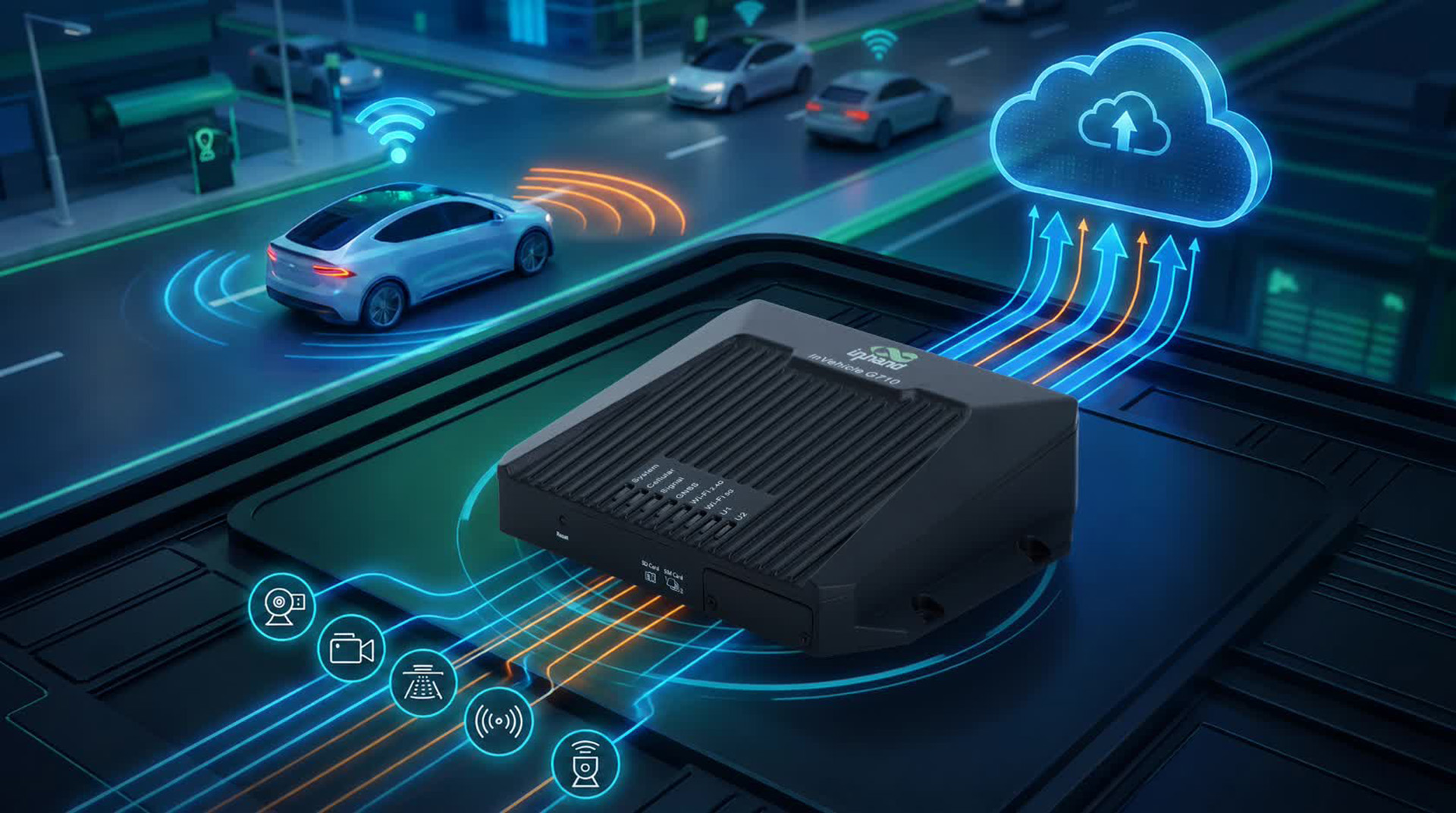
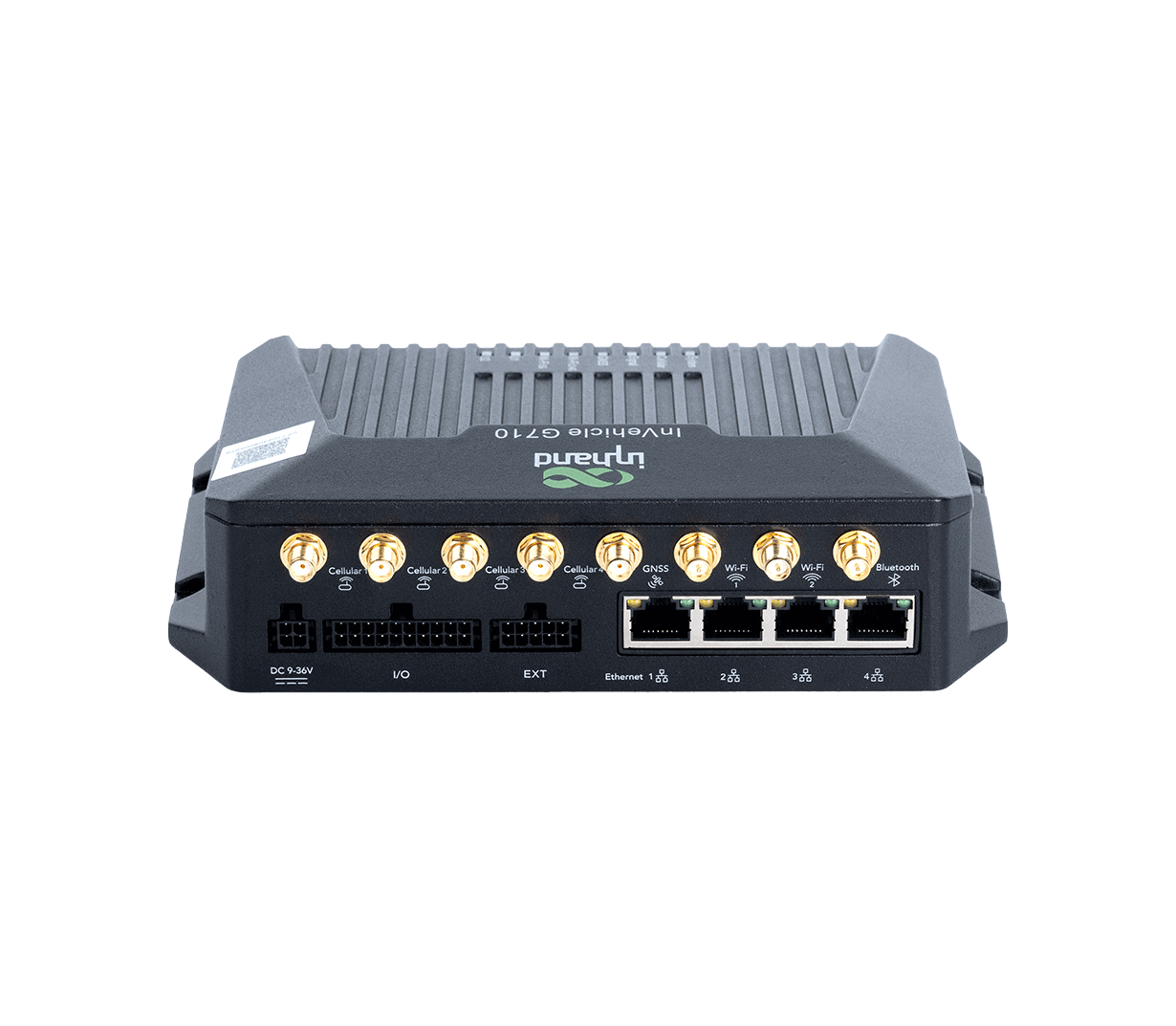
Designed for Internet of Vehicles (IoV) applications, VG710 integrates 5G connectivity, vehicle interfaces, positioning capability, and edge computing into a single industrial-grade platform.
Supporting 5G NR NSA/SA and LTE connectivity, VG710 provides high-speed wireless communication for mobile transportation scenarios.
Beyond networking, VG710 provides rich vehicle interfaces including CAN, RS232, RS485, digital input/output, and other connectivity options to support diverse onboard devices and data acquisition requirements.
With integrated GNSS positioning capability, the gateway can support applications that require accurate vehicle location information, such as fleet monitoring and operational management.
More importantly, VG710 extends vehicle intelligence through edge computing capabilities. It supports application development and deployment through technologies such as Docker and Node-RED, enabling developers to build customized edge applications closer to the vehicle.
The future of transportation depends on intelligent connectivity
The next generation of transportation will not be defined only by faster networks. It will be defined by how effectively vehicles can collect information, process data, and interact with digital platforms.
As vehicles become increasingly connected and intelligent, the role of vehicle gateways will continue to expand. They will serve as the bridge between onboard systems, cloud platforms, and edge applications.
The future of mobility is not simply about connecting more vehicles. It is about creating smarter, more responsive, and more reliable transportation ecosystems. And intelligent vehicle gateways will become a key foundation supporting this transformation.


 Frag die KI alles