Skip to content

Configuration Guide for the Remote Management System of Secondary Water Supply Facilities

1. Document Information

  • Document name: IG902 Gateway Configuration Guide
  • Product model: IG902
  • Firmware version: V2.1.13
  • APP version: 2.6.1
  • Applicable scenarios: industrial data collection, device networking, edge collection to the cloud
  • Date of preparation: March 25, 2026

2. Gateway Overview

2.1 Product Introduction

This data acquisition gateway is used for data collection from PLCs, instruments, sensors, variable frequency drives (VFDs), servos, and other devices in industrial sites. It supports multi-protocol parsing, edge computing, resumable transmission after network interruption, remote management, and data upload to the cloud.

2.2 Main Functions

  • Network port collection
  • Mainstream industrial protocol parsing
  • MQTT data upload
  • Edge computing, local caching
  • Remote configuration, remote diagnosis, remote upgrade
  • Wide-temperature industrial-grade design

2.3 Typical Application Topology

Device → Ethernet → data acquisition gateway → 4G / Ethernet → cloud platform

3. Hardware Description

3.1 Appearance and Interfaces

  • Power interface: DC 12–48V
  • Serial ports: RS232 ×1 + RS485 ×1 channel
  • Network ports: LAN ×2 channels (or 1WAN + 1LAN, configurable)
  • Wireless: 4G/5G/Wi-Fi (optional)
  • Indicators: PWR, RUN, COM, NET, signal strength
  • Reset button: restore factory settings

3.2 Wiring Instructions

3.2.1 Power Wiring

  • Positive pole: V+
  • Negative pole: V-
  • Note: reverse-connection protection, lightning protection, grounding

3.2.2 RS485 Wiring

  • A → 485+
  • B → 485-
  • Shield grounded at one end
  • Termination resistor: 120Ω (required for long distances)

3.2.3 Ethernet Wiring

Straight-through / crossover auto-adaptive; Category 5e or higher network cable is recommended.

4. Factory Default Parameters

  • Default IP: 192.168.2.1
  • Subnet mask: 255.255.255.0
  • Web username: adm
  • Web password: 123456
  • Serial port default parameters: 9600,8,N,1

5. Preparations

  • Set the computer to an IP in the same network segment as the gateway
  • Connect the computer to the gateway's LAN port with a network cable
  • Power on the gateway and wait for the RUN indicator to stay steadily lit
  • Enter the gateway's IP in the browser to access the configuration page

6. Network Configuration

6.1 LAN Port Configuration (Static / DHCP)

  • Go to [Network Settings] → [LAN]
  • Select static IP / DHCP
  • Set IP, subnet mask, gateway, DNS
  • Save and apply

6.2 4G Wireless Network Configuration (Optional)

  • Insert the SIM card
  • Enable the mobile network
  • APN: automatic / manual entry
  • View signal strength
  • Enable network backup (wired preferred, 4G backup)

7. Serial Port Configuration

7.1 Serial Port Parameter Settings

  • Go to [Serial Port Configuration] → [COM1/COM2…]
  • Mode selection: collection mode
  • Baud rate: 9600
  • Data bits: 8
  • Parity bit: None
  • Stop bit: 1
  • Flow control: None
  • Save to take effect

8. Device and Protocol Configuration

8.1 Supported Protocol List

  • Modbus RTU / TCP
  • PLC protocols: Siemens, Mitsubishi, Omron, Schneider, Delta, Xinje, etc.
  • Instrument protocols: DL/T645, CJ/T188, etc.
  • Custom protocols

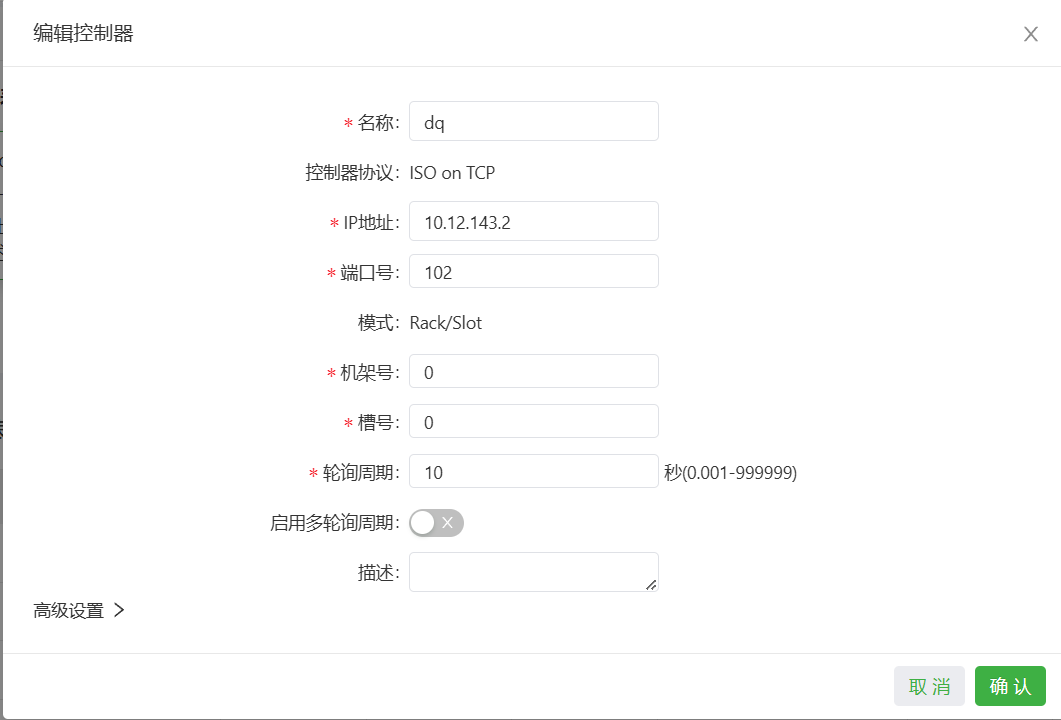
8.2 Adding a Collection Device

  • Go to [Data Collection Configuration] → [Add Device]
text

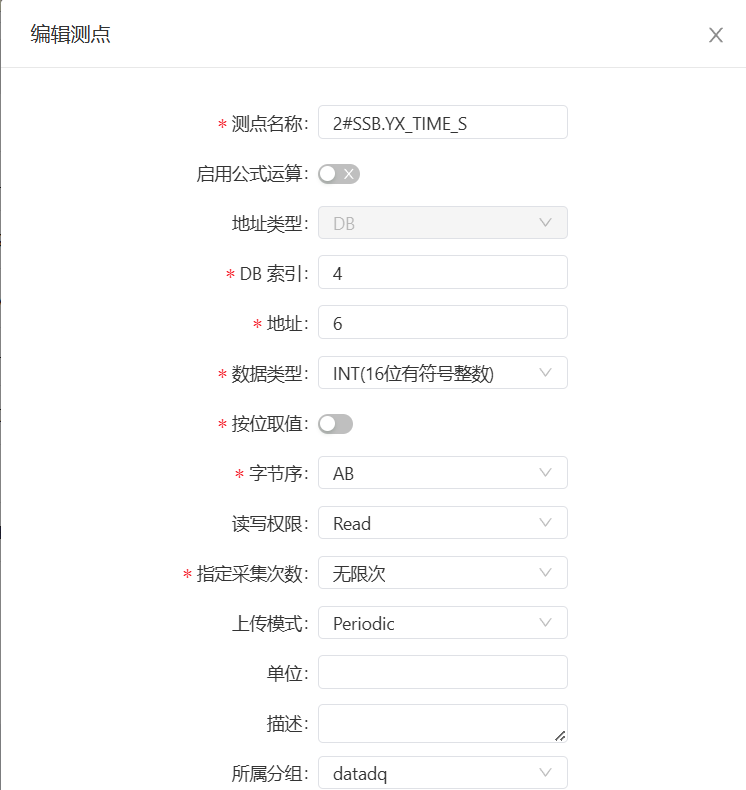
8.3 Adding Collection Data Points

  • Go to [Data Point Configuration] → [Add Data Point] text
8.4 Data Point Table Import/Export

text

Supports Excel batch import and export backup.

9. Data Upload Configuration

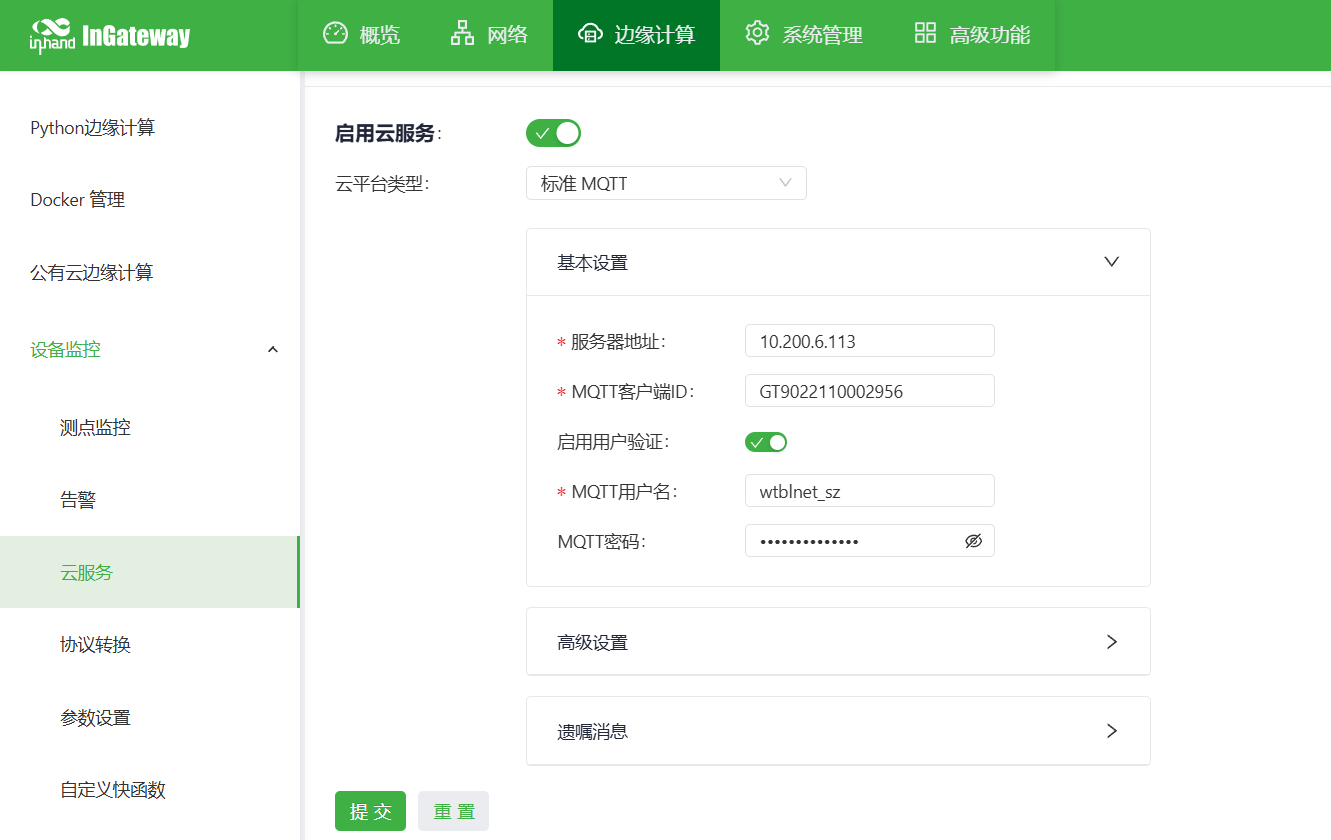
9.1 MQTT Upload (Common Cloud Connection Method)

  • Go to [Upload Configuration] → [MQTT]
  • Enable MQTT
  • Server address: 10.200.6.113:1883
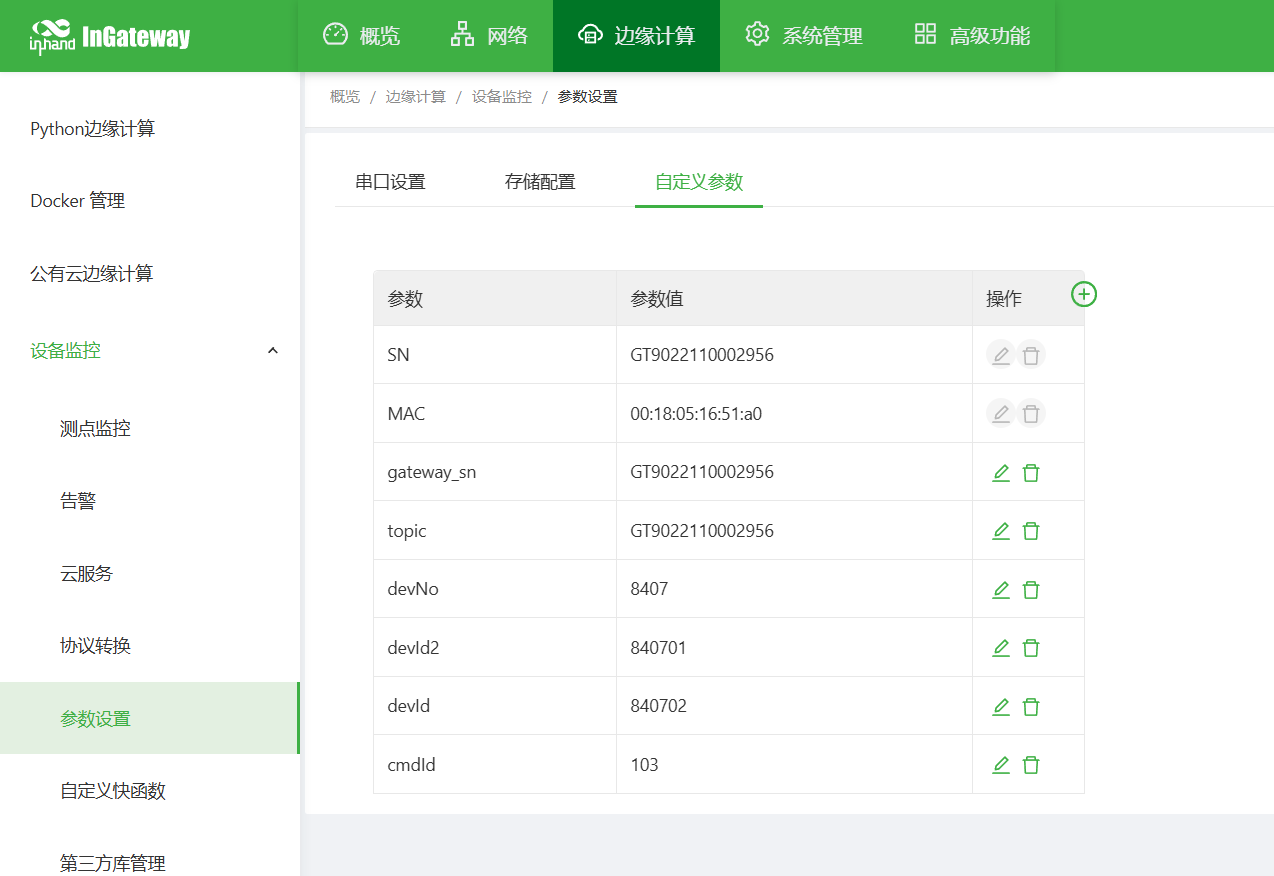
  • Client ID: GT9022110002956 (gateway SN)
  • Username: wtblnet_sz
  • Password: sas@SZ#kj_we3e

text

text

  • Data format: JSON / custom.
# Publish format
from collections import OrderedDict
import time
from common.Logger import logger
import json

def main(data_collect, wizard_api):
    global_argv = wizard_api.get_global_parameter()
    msg = OrderedDict()
    msg["cmdId"] = global_argv["cmdId"]
    msg["gatewaySn"] = global_argv["gateway_sn"]
    for device, value_dict in data_collect["values"].items():
        for name, value in value_dict.items():
            if "gq" == device and value["status"] == 1:
                msg["devId"] = global_argv["devId"]
                msg["devNo"] = global_argv["devNo"]
                msg["Time"] = time.strftime("%Y-%m-%d %H:%M:%S", time.localtime(data_collect["timestamp"]))
                msg[name] = value["raw_data"]
            if "zq" == device and value["status"] == 1:
                msg["devId"] = global_argv["devId1"]
                msg["devNo"] = global_argv["devNo"]
                msg["Time"] = time.strftime("%Y-%m-%d %H:%M:%S", time.localtime(data_collect["timestamp"]))
                msg[name] = value["raw_data"]
            if "dq" == device and value["status"] == 1:
                msg["devId"] = global_argv["devId2"]
                msg["devNo"] = global_argv["devNo"]
                msg["Time"] = time.strftime("%Y-%m-%d %H:%M:%S", time.localtime(data_collect["timestamp"]))
                msg[name] = value["raw_data"]
            msg[name] = value["raw_data"]
            if "cgq" == device and value["status"] == 1:
                msg["devId"] = global_argv["devId3"]
                msg["devNo"] = global_argv["devNo"]
                msg["Time"] = time.strftime("%Y-%m-%d %H:%M:%S", time.localtime(data_collect["timestamp"]))
                msg[name] = value["raw_data"]
            msg[name] = value["raw_data"]
    res = json.dumps(msg).replace(": ", ":").replace(", ", ",")
    logger.info(res)
return res
Subscribe format:
from common.Logger import logger
from quickfaas.remotebus import publish
import json
import time
from collections import OrderedDict
from quickfaas.measure import recall2
from quickfaas.measure import write_plc_values
from quickfaas.global_dict import get_global_parameter

def main(topic, payload, wizard_api): # Define the main subscription function
    logger.info(topic) # Print the subscribed topic, assuming the topic is request/v1
    logger.info(payload) # Print the subscribed data
    global_parameter = get_global_parameter()
    payload = json.loads(payload) # Deserialize the subscribed data

    if payload["cmdId"] == 87:
        data_dict = {payload["varId"]: eval(payload["writeValue"])}
        logger.info(data_dict)
        write_plc_values(data_dict)
        userdata = ["/sys/"+global_parameter["topic"]+"/up",data_dict]
        write_plc_values(data_dict, callback = write_ack, userdata = userdata, timeout = 60) # Call the send_message_to_partner method to deliver the data in the message dictionary to the specified variable; call the ack method and send ack_tail to the ack method
    elif payload["cmdId"] == 85:
        acl_tail = None 
        if "devId" in payload:
            ack_tail = str(payload["devId"])
        recall2(callback = read_ack, userdata = ack_tail, timeout = 10)

def write_ack(send_result, ack_tail): # Define the ack method
    global_parameter = get_global_parameter()
    sn = global_parameter["gateway_sn"]
    if not send_result and isinstance(send_result, tuple): # Check whether the delivery timed out
        resp_data = {"cmdId":88, "gwSn":sn, "flag":1, "msg": "failed"} # Define the response data for delivery timeout
    else:
        resp_data = {"cmdId":88, "gwSn":sn, "flag":1, "msg": "success"} # Define the response data for delivery without timeout
    resp_data = json.dumps(resp_data).replace(": ", ":").replace(", ", ",")
    logger.info(resp_data)
    publish("/sys/"+global_parameter["topic"]+"/up", resp_data, 1) # Call mqtt_publish to send the response data to the MQTT server

def read_ack(read_result, ack_tail): # Define the ack method
    global_argv = get_global_parameter()
    global_parameter = get_global_parameter()
    sn = global_parameter["gateway_sn"]
    logger.info(ack_tail)
    logger.info(global_parameter["devId"])
    logger.info(read_result)
    if not read_result and isinstance(read_result, tuple): # Check whether the delivery timed out
        pass
        #resp_data = {"cmdId":88, "gwSn":sn, "flag":1, "msg": "failed"} # Define the response data for delivery timeout
    else:
        resp_data = OrderedDict()
        resp_data["varList"] = []
        resp_data["devId"] = ack_tail
        resp_data["cmdId"] = 86
        resp_data["gatewaySn"] = global_argv["gateway_sn"]
        resp_data["flag"] = 1
        resp_data["msg"] = "success"
        read_time = time.strftime("%Y-%m-%d %H:%M:%S", time.localtime(read_result["timestamp"]))
        #if ack_tail:
        for device, value_dict in read_result["values"].items():
            if int(ack_tail) == int(global_parameter["devId"]) and "gq" == device:
                for name, value in value_dict.items():
                    dvar = {"varName": name, "varValue": value["raw_data"], "readTime": read_time, "varId": name, "isWarn": 0}
                    resp_data["varList"].append(dvar)
                break
            elif int(ack_tail) == int(global_parameter["devId1"]) and "zq" == device:
                for name, value in value_dict.items():
                    dvar = {"varName": name, "varValue": value["raw_data"], "readTime": read_time, "varId": name, "isWarn": 0}
                    resp_data["varList"].append(dvar)
                break
            elif int(ack_tail) == int(global_parameter["devId2"]) and "dq" == device:
                for name, value in value_dict.items():
                    dvar = {"varName": name, "varValue": value["raw_data"], "readTime": read_time, "varId": name, "isWarn": 0}
                    resp_data["varList"].append(dvar)
            elif int(ack_tail) == int(global_parameter["devId3"]) and "cgq" == device:
                for name, value in value_dict.items():
                    dvar = {"varName": name, "varValue": value["raw_data"], "readTime": read_time, "varId": name, "isWarn": 0}
                    resp_data["varList"].append(dvar)
                break
        #else:
            #for device, value_dict in read_result["values"].items():
                #for name, value in value_dict.items():
                    #dvar = {"varName": name, "varValue": value["raw_data"], "readTime": read_time, "varId": name, "isWarn": 0}
                    #resp_data["varList"].append(dvar)
    resp_data = json.dumps(resp_data).replace(": ", ":").replace(", ", ",")
    logger.info(resp_data)
    publish("/sys/"+global_parameter["topic"]+"/up", resp_data, 1)

Test connection → Save

9.2 Configuration Backup and Recovery

  • Export the configuration file

10. Status Monitoring and Diagnosis

10.1 Running Status

  • Device online status
  • Real-time values of collection data points
  • Serial port transmit/receive packet statistics
  • Network traffic, signal strength
  • CPU, memory, temperature

10.2 Log Viewing

  • System logs
  • Collection logs
  • Upload logs
  • Alarm logs

11. Common Issues and Troubleshooting

  • Unable to open the Web
  • Check whether the network segment, network cable, and IP conflict
  • Reset the gateway and retry
  • Device online but no data
  • Check the data point address and data type
  • View the collection logs
  • Check whether the device supports the protocol
  • MQTT connection failure
  • Whether the network is reachable
  • Server address, port, username, password
  • Whether the firewall / port is open

12. Safety Precautions

  • Reliable grounding at the industrial site
  • Avoid hot-plugging serial ports while powered
  • Back up after configuration is complete
  • Change the remote password regularly
  • Unauthorized personnel are prohibited from operating

13. Appendix

13.1 Glossary

  • RTU, TCP, MQTT, edge computing, data point, register, station number, collection interval