InHand Launches Mo AI SBCs for Edge Vision AI
Unternehmensnachrichten
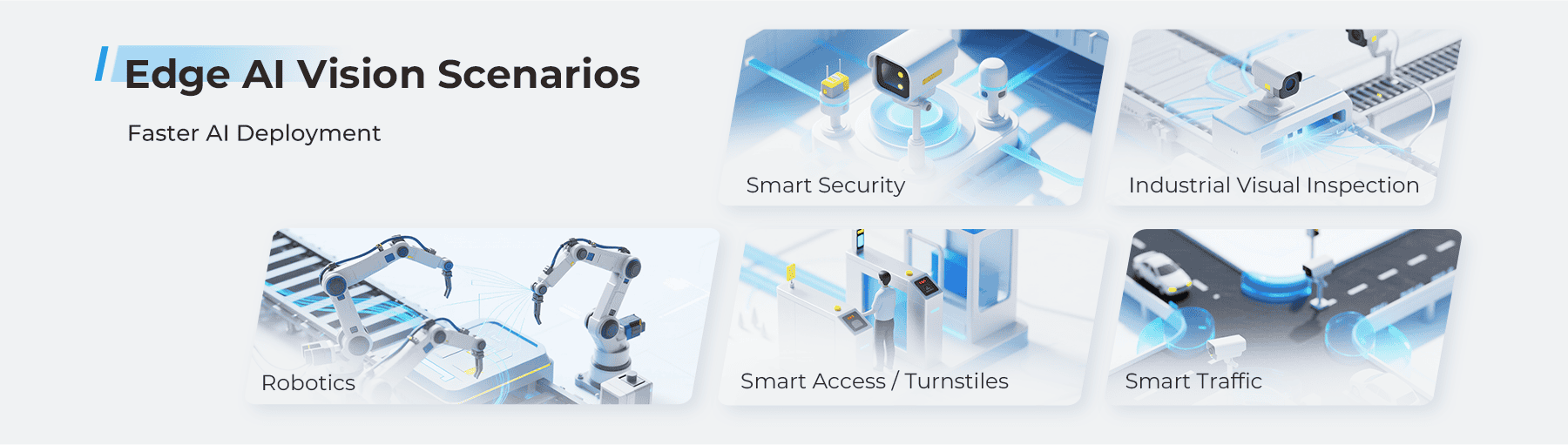
InHand has announced the launch of the Mo 62A and Mo 68A AI single-board computers, designed for edge vision AI, intelligent terminals, and on-device AI applications. The new boards can support development projects for industrial equipment, access control systems, robotics, smart cameras, visual inspection terminals, and other embedded AI devices.
Unlike conventional single-board computers that focus mainly on size, interfaces, and compute performance, the Mo 62A and Mo 68A are built to help developers move through the edge AI development workflow more efficiently.
The boards come with a prepared AI development environment and support key stages of the vision AI pipeline, including camera input, video processing, on-device inference, and inference result output. This helps project teams move from algorithm validation toward working product prototypes with less lower-level integration work.
Reducing Setup Work for Edge AI Development
In many edge AI projects, the algorithm work is already complex. Engineering tasks such as environment setup, inference framework adaptation, camera debugging, and model deployment can further extend the validation cycle.
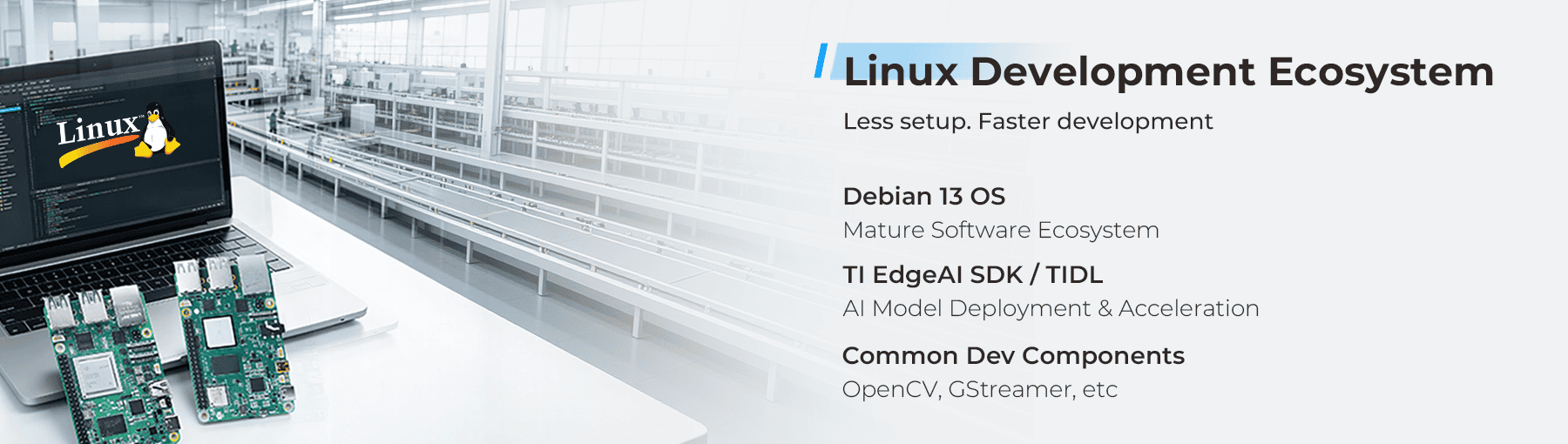
The Mo 62A and Mo 68A support Debian, TI EdgeAI SDK / TIDL, OpenCV, GStreamer, and other commonly used development components. Developers can use these environments for model deployment, video capture, image processing, and inference result handling, reducing the time spent building the software stack and troubleshooting dependencies from scratch.
Instead of starting with a blank hardware board, developers can begin with a prepared environment and example workflow. They can first run and validate models, then build application-specific functions such as visual recognition, object detection, zone-based alerts, identity verification, and device control according to project requirements.
From Hardware and Software Integration to Application Prototyping
In real-world AI product development, deployment depends not only on whether a model can run, but also on whether the hardware can fit into the target device and whether the software workflow can support the application.
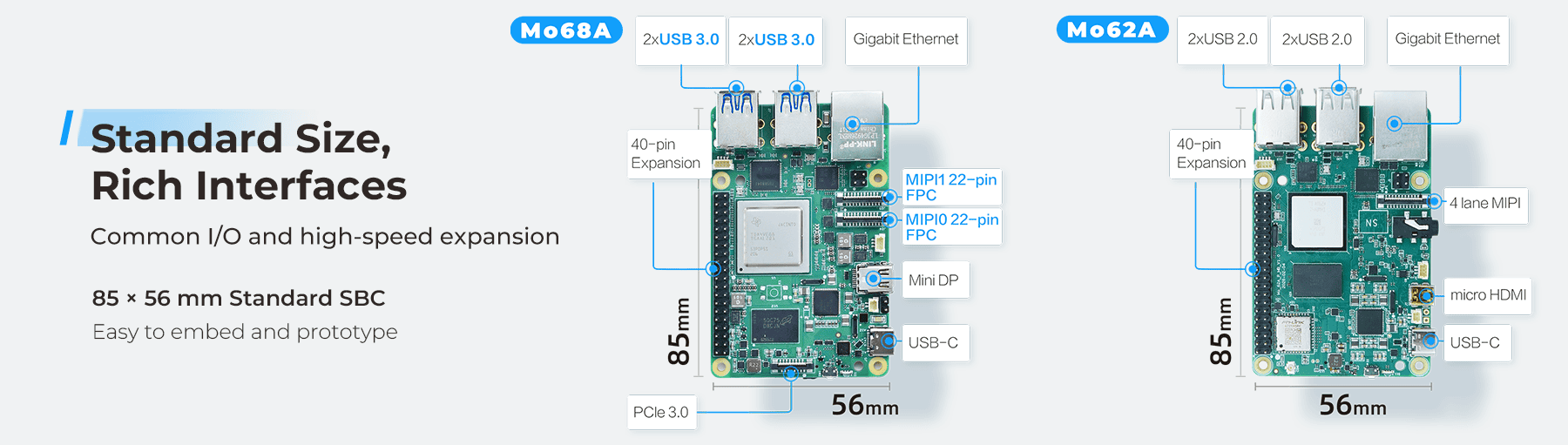
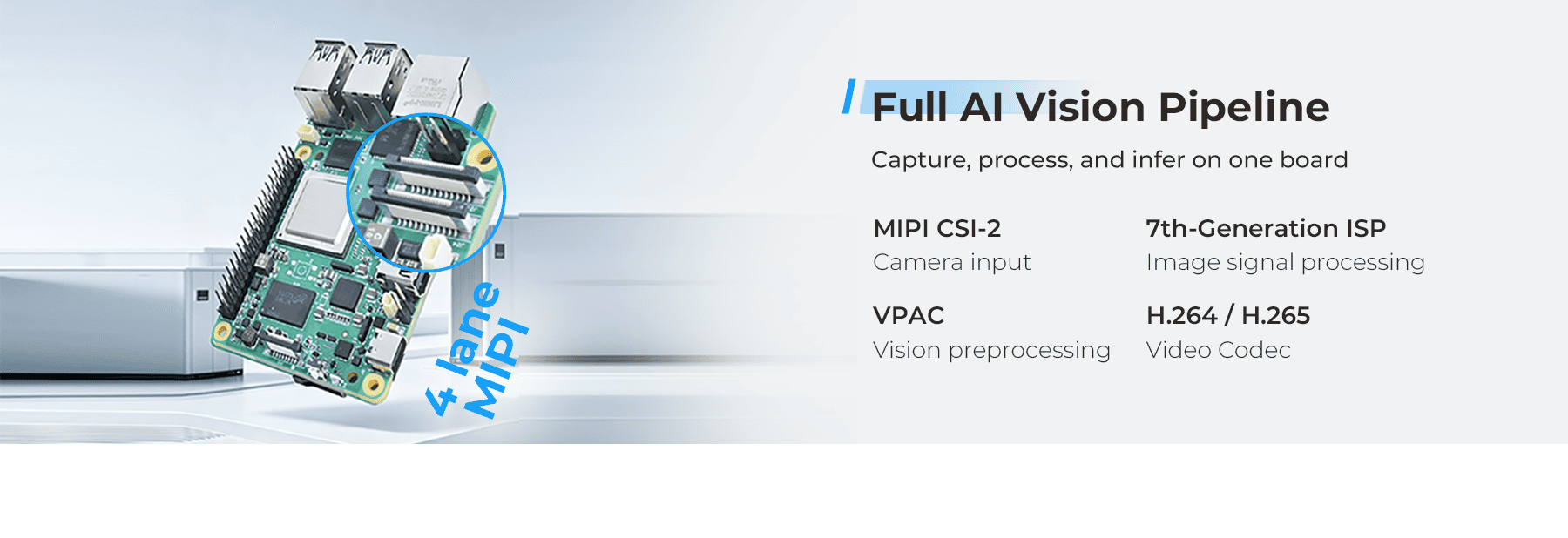
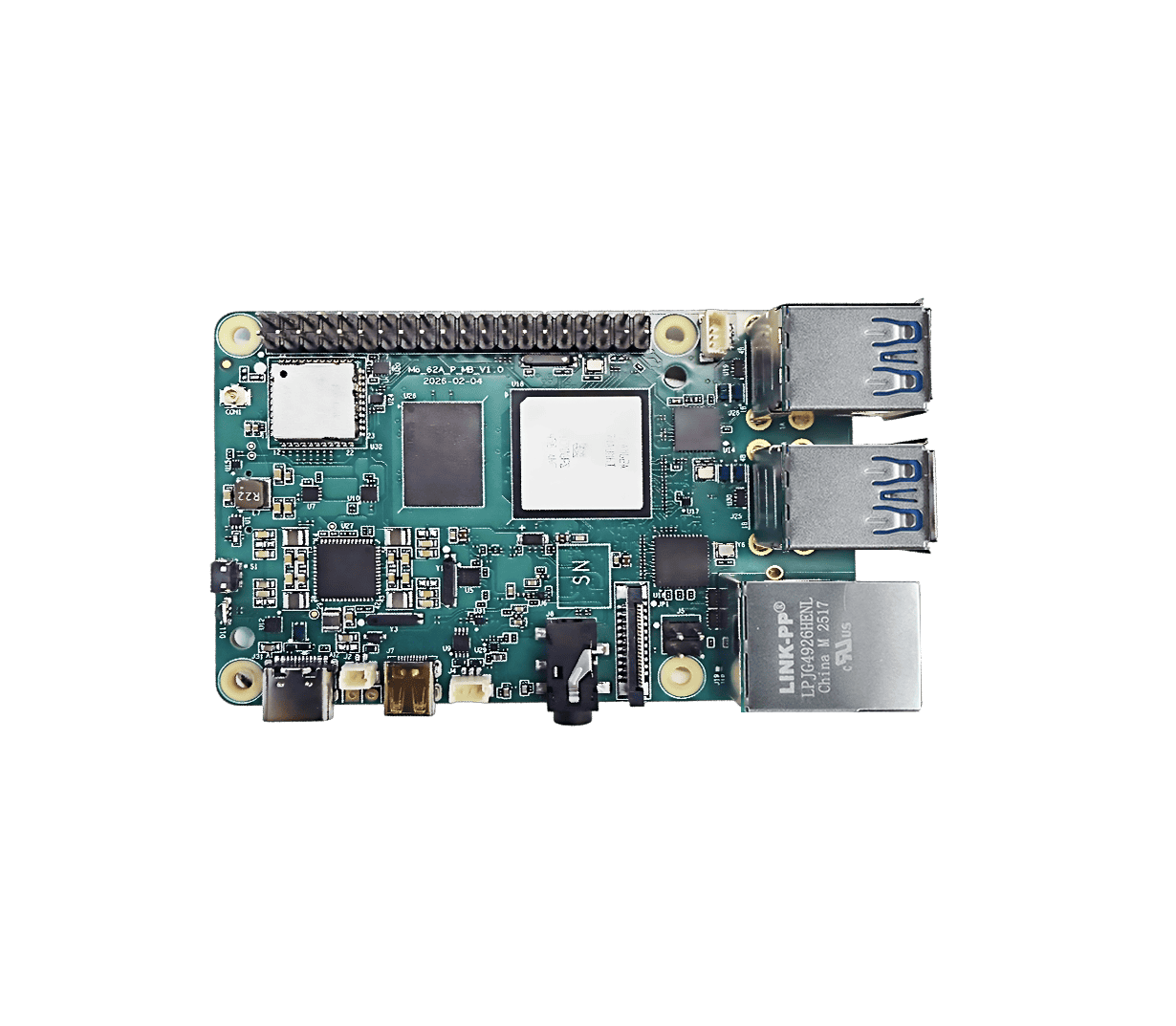
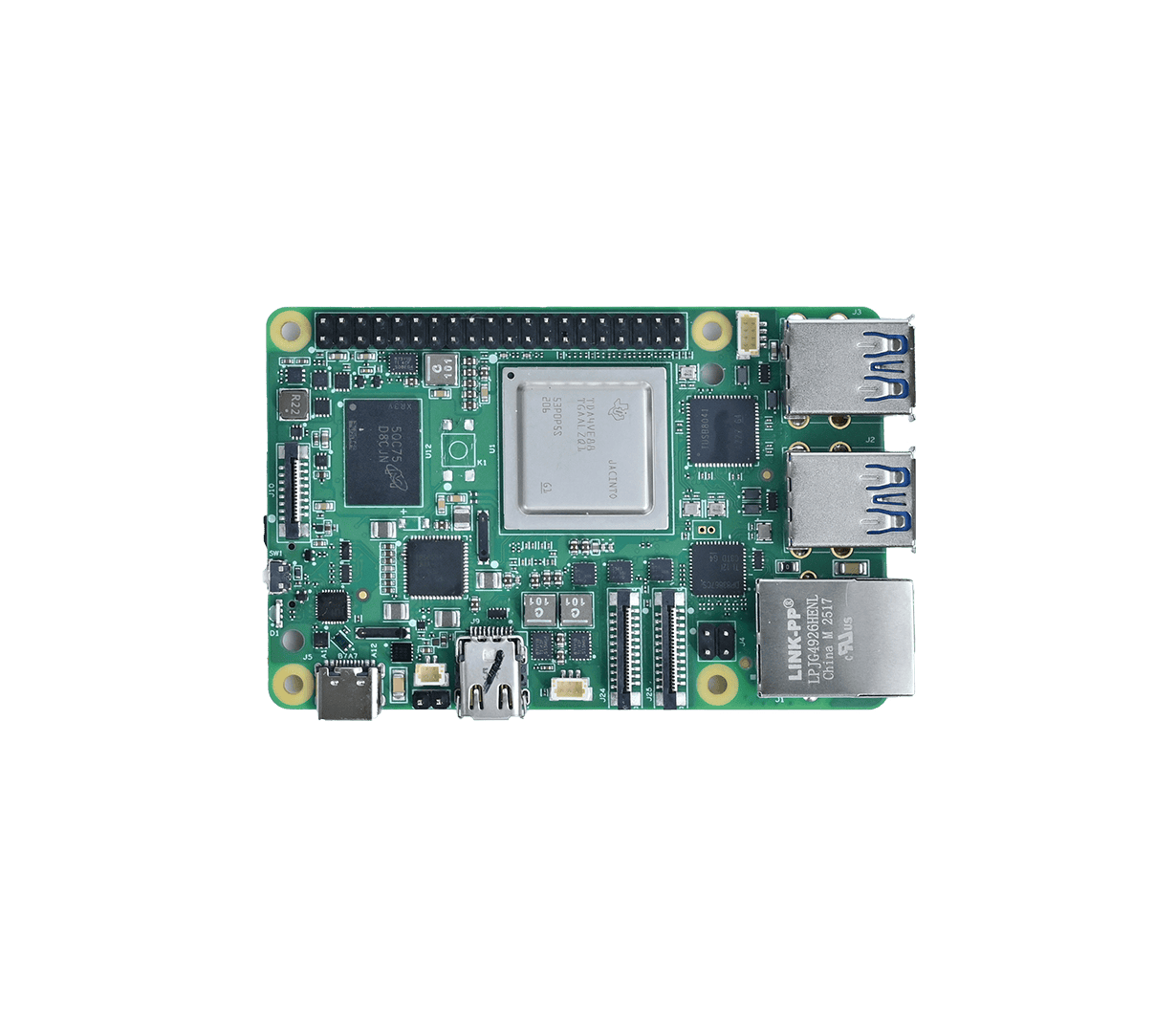
On the hardware side, the Mo 62A and Mo 68A support MIPI CSI camera input, integrate 7th-generation ISP image processing capabilities, and support H.264 / H.265 video codecs. With an 85 × 56 mm standard SBC form factor, the boards also provide common interfaces for camera input, network communication, display output, peripheral connection, and functional expansion. This helps development teams embed the boards into existing device structures such as industrial equipment, access control systems, robots, smart cameras, and visual inspection terminals, while reducing structural adjustment, adapter work, and hardware debugging.
On the software side, image capture, video processing, AI inference, and result output can be completed on the board, supporting the basic workflow from camera input to inference result output. This can reduce reliance on external video processing modules, cloud-based inference, and overly complex system architectures. It also gives customers a practical foundation for developing application logic such as alerts, gate opening, snapshot capture, data upload, display output, or peripheral control based on on-site business requirements.

As a result, the Mo 62A and Mo 68A do more than run AI models on the board. They help development teams validate the path from hardware input and video processing to AI inference and result output earlier in the product development process. Teams can build demonstrable, testable, and continuously iterated prototypes sooner, while identifying issues related to mechanical design, performance, interfaces, and application interaction at an earlier stage.
Choosing the Right Platform for Different AI Workloads
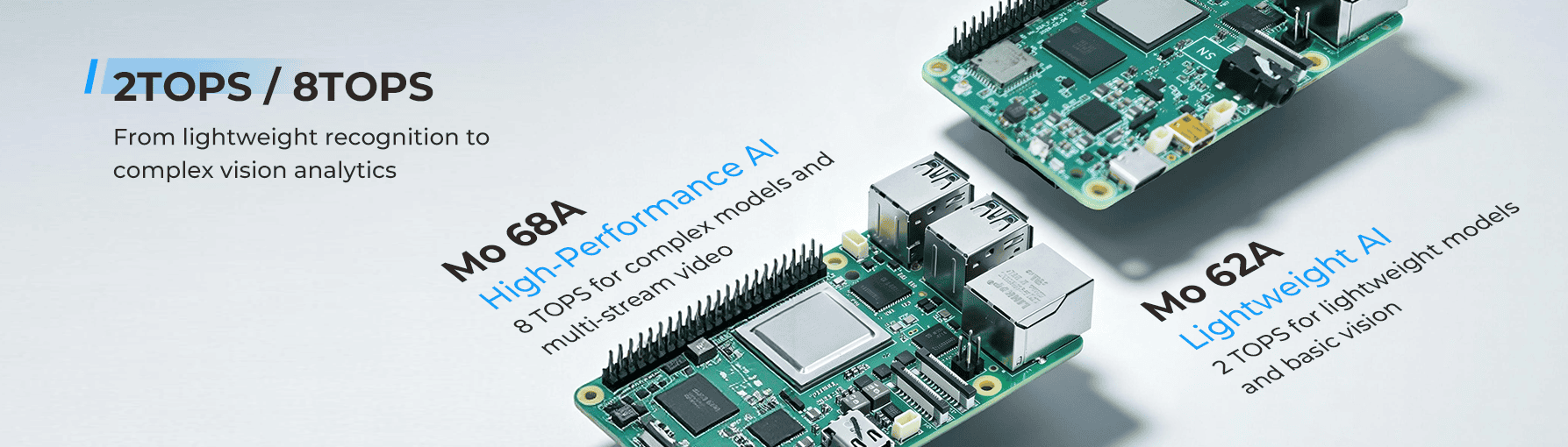
Different AI applications have different requirements for compute performance, video processing, and expansion interfaces. The Mo 62A and Mo 68A provide 2 TOPS and 8 TOPS of AI computing performance respectively, allowing project teams to choose a platform based on model complexity, video workload, recognition tasks, and product form factor.
Der Mo 62A provides 2 TOPS of AI computing performance and is suitable for lightweight vision recognition, single-camera applications, access control systems, smart cameras, basic vision analytics, and entry-level robot vision projects.
Der Mo 68A provides 8 TOPS of AI computing performance and is designed for applications with higher inference, video processing, and expansion requirements, such as multi-model workloads, multi-stream video analysis, industrial visual inspection, intelligent transportation, and robot vision. Actual video stream capacity and model concurrency depend on model complexity, resolution, frame rate, frame sampling strategy, and application logic.
Supporting Long-Term Edge AI Deployment
Once AI-enabled devices are deployed in the field, stability, security, and maintainability become as important as model performance. Unattended devices, industrial equipment, security systems, and visual inspection devices often need to operate for long periods and may face issues such as power interruptions, system faults, data security requirements, and remote maintenance needs.
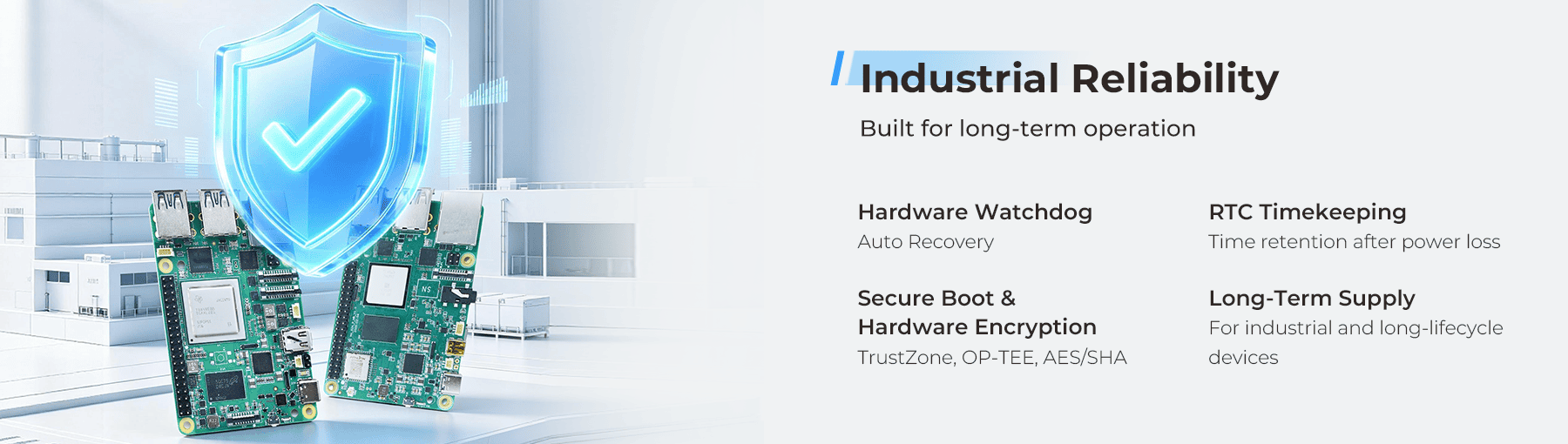
The Mo 62A and Mo 68A support hardware watchdog, RTC timekeeping, secure boot, TrustZone, OP-TEE, and hardware encryption, providing a foundation for long-term field deployment. InHand also supports customers through its R&D, manufacturing, supply chain, and technical service capabilities.
Bringing Edge AI Development Closer to Real Devices
As AI moves closer to the device side, more intelligent products need to sense, analyze, and respond locally. The Mo 62A and Mo 68A combine compact hardware, on-device inference, vision processing capabilities, and a prepared development environment on a single board, providing developers with a practical foundation for moving from model validation to product prototyping.
For edge vision AI applications, the InHand Mo 62A and Mo 68A help complete development environment preparation, vision pipeline integration, and basic interface adaptation in advance. This allows development teams to spend less time on lower-level configuration and debugging, and more time improving model performance, business logic, and product experience.