Posez n'importe quelle question à l'IA

Can a Router Be Used Outdoors Long Term with Just a Weatherproof Enclosure?

Blog

Outdoor surveillance cameras, access gates, self-service terminals, and similar devices are often deployed along roads, in industrial parks, at transport facilities, and in other outdoor environments. Whether they are uploading data, receiving commands, or connecting to a remote management platform, they all depend on reliable network connectivity.
Fixed broadband is not always available at these sites, so 4G and other cellular networks have become a common way to connect them.
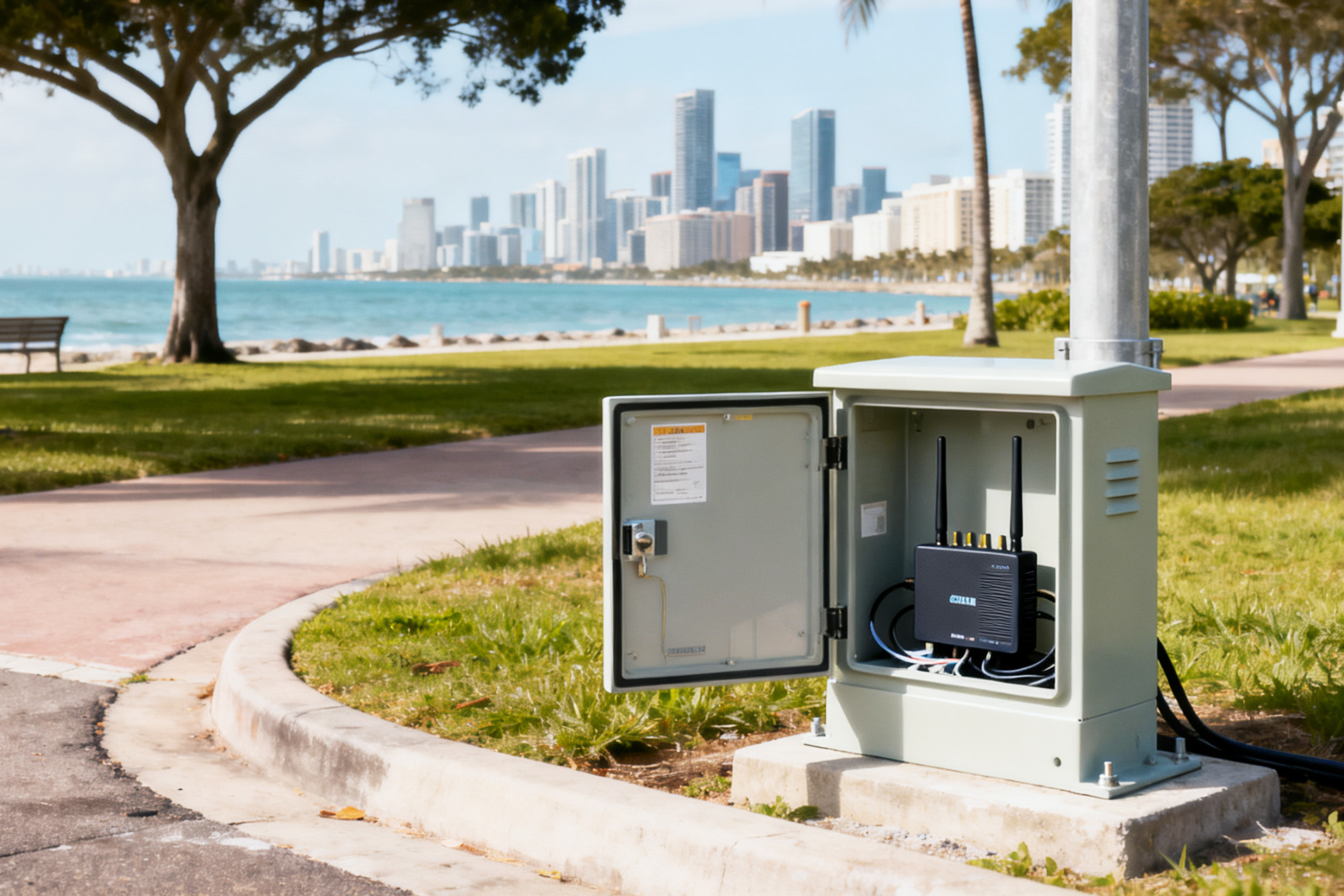
In practice, many projects use a simple, straightforward setup:
An indoor router in a weatherproof enclosure.
The enclosure provides some protection from rain. Over extended periods of operation, however, outdoor connectivity has to contend with much more than rainfall.

Can It Withstand Outdoor Conditions?

Equipment installed outdoors must first cope with constantly changing environmental conditions.

Heat is one example. Routers, cellular modules, and power supplies all generate heat. When indoor equipment is placed in a sealed enclosure, airflow is restricted. Direct afternoon sun or an exposed installation can place even more pressure on heat dissipation.

Condensation is another issue that is easy to overlook.

As temperatures rise and fall between day and night, the air repeatedly warms and cools. When humid air comes into contact with a colder enclosure wall, connector, or circuit board, water droplets may form. Over time, this increases the risk of moisture damage and connector corrosion.

Equipment intended for outdoor use needs to be designed around these persistent environmental changes.

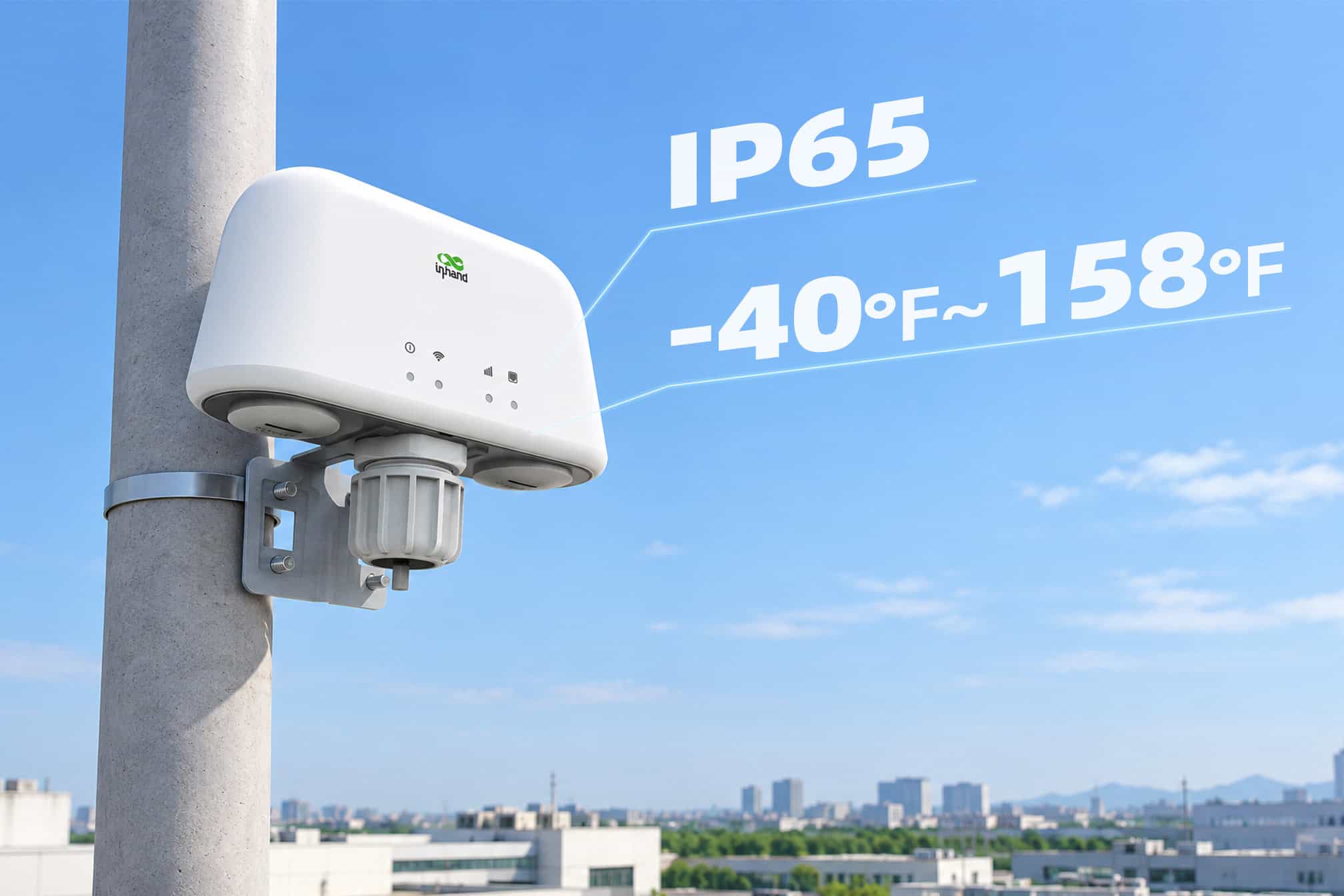
To address these requirements, InHand Networks introduced the ODU302 outdoor 4G router.

Designed from the outset for outdoor deployment, the ODU302 addresses environmental resilience, installation, power input, cellular connectivity, and long-term operation, reducing reliance on separate protective components and on-site assembly.

The value of the ODU302 extends beyond reliable outdoor operation.

Placing the network access point outdoors where reception is better also offers another way to connect equipment located inside a building or cabinet.

Outdoor Placement Can Improve Signal Quality

Many connected devices are located in places that are inherently unfriendly to cellular signals, including metal control cabinets, building interiors, underground areas, and sealed equipment cabinets.

Metal structures and building walls can both attenuate cellular signals.

One common approach is to keep the router inside the cabinet and run antenna feedlines outdoors.

This adds feedlines, RF connectors, enclosure penetrations, and sealing work. The feedline itself also introduces some signal loss. The more connections a system has, the more points there are to install and inspect during future troubleshooting.

The ODU302 takes a different approach:

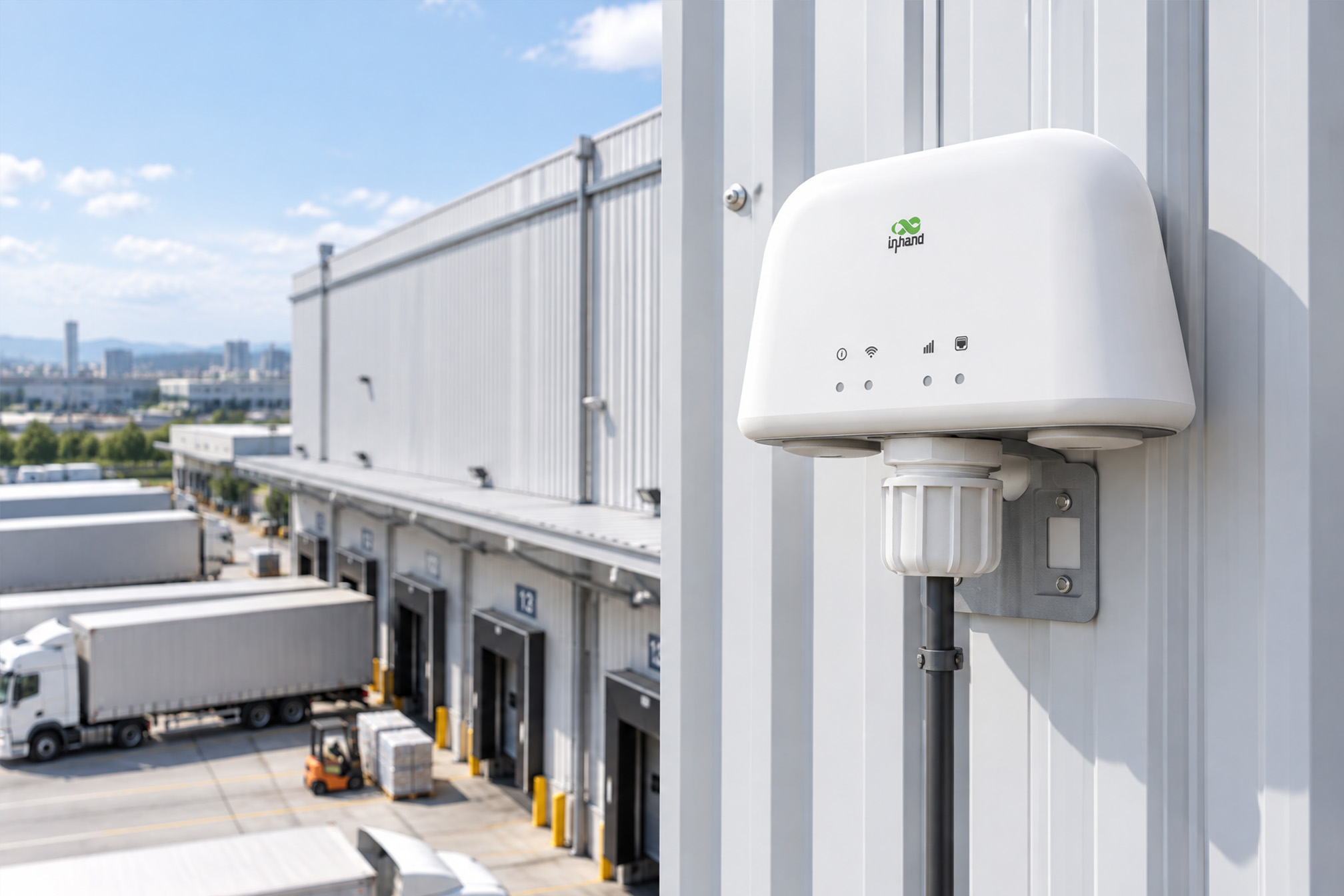
Place the router and its antennas outdoors together.

The ODU302 has built-in 4G antennas and supports top, wall, and pole mounting. It can be installed on top of a cabinet, on an exterior wall, on a surveillance pole, or in another suitable location.

The main objective is not simply to pursue a stronger signal, but to shorten the signal path and reduce the number of intermediate components.

The signal no longer has to pass through a wall.

Truly Unattended Operation Means More Than Having No One on Site

Outdoor devices share another characteristic:

They are often located far from the people who maintain them.

That distance is easy to overlook while the equipment is operating normally. It becomes a problem as soon as the connection drops, a cellular connection fails, or the device itself develops a fault.

If every fault requires a technician to travel to the site, unattended operation simply means that no one happens to be there at the time.

Network equipment designed for unattended operation needs to address two requirements:

Recover automatically whenever possible.

When automatic recovery is not possible, give the operations team enough remote visibility to understand what happened.

The ODU302 can monitor link status using ICMP, TCP, or DNS and redial after an interruption. Dual-SIM failover, cellular and wired WAN backup, and a hardware watchdog provide recovery paths for different types of network and device faults.

If the problem cannot be resolved automatically, the ODU302 can also connect to InHand Networks Device Manager.

Operations teams can remotely view device status, configurations, and alarms, as well as push configurations, update firmware, and restart devices.

Remote management cannot repair a damaged cable or restore an interrupted external power supply.

It can, however, help the operations team answer two questions before anyone is sent to the site:

Can the problem be resolved remotely?

If a site visit is necessary, what should the technician inspect first?

When a deployment grows from a handful of sites to dozens or hundreds, avoiding even one unnecessary visit saves labor, travel, and troubleshooting costs.


Outdoor Connectivity Turns Field Experience into a Repeatable Solution

This brings us back to the original question:

Can an indoor router in a weatherproof enclosure be used outdoors?

Yes, it can.

For projects that already use purpose-built outdoor cabinets, require a dedicated external antenna, or need to house several types of equipment together, a component-based solution still offers useful flexibility.

As the number of outdoor sites grows, however, the question is no longer limited to whether an individual site can be installed successfully.

Projects must also consider whether dozens or hundreds of sites can be deployed, operated, and maintained in a consistent way.

The ODU302 brings outdoor protection, antennas, power options, network recovery, and remote management together in a single product design as far as practical.

Its value lies in more than eliminating a weatherproof enclosure.

More importantly, it makes outdoor connectivity that once depended on on-site assembly and individual experience easier to turn into repeatable, manageable deployments.

Outdoor connectivity is about more than placing equipment outdoors.

It is about keeping that connection stable and available outdoors over the long term.

En savoir plus