


EC3588-C
AI System on Module
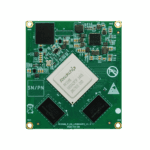
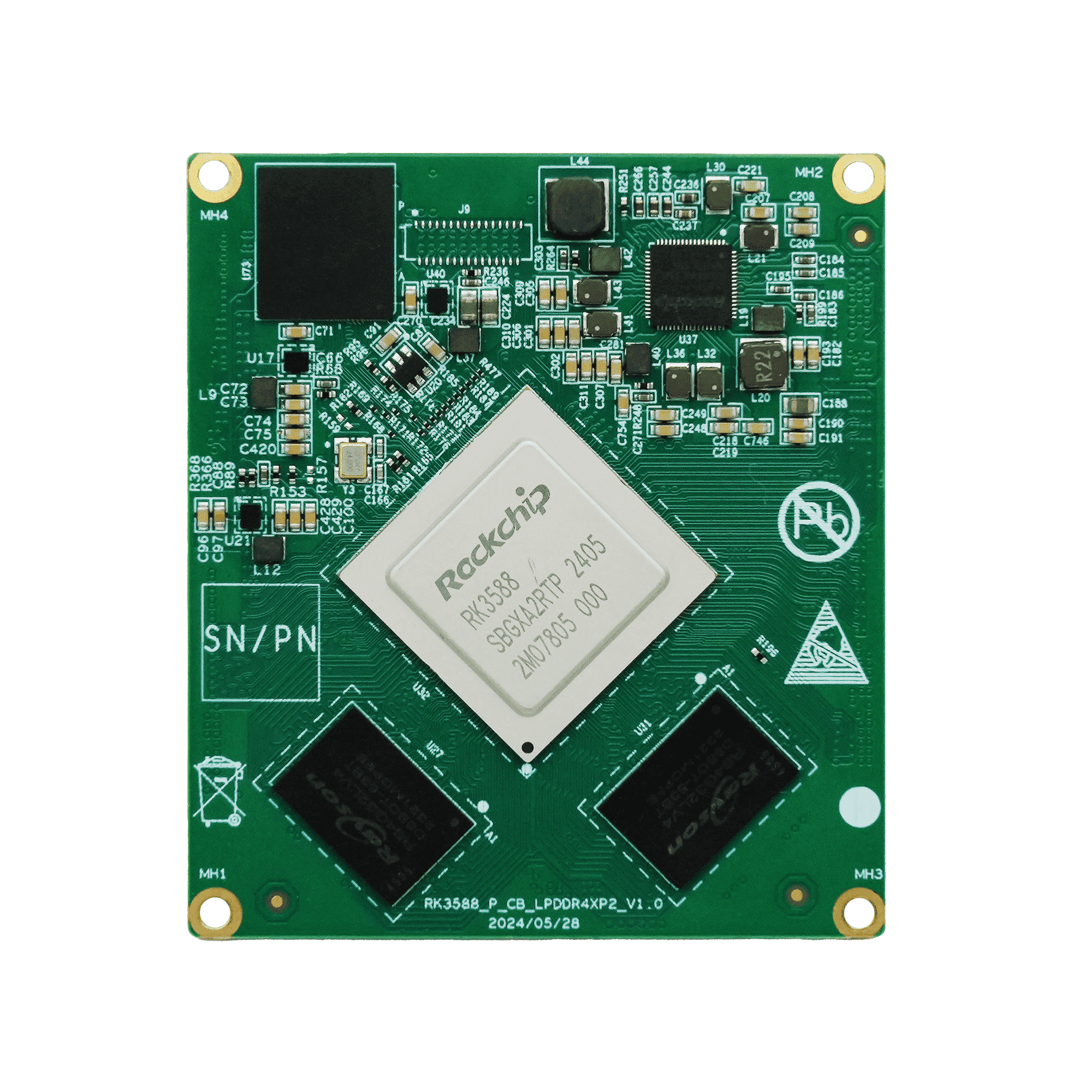
EC3588-C system on module is developed based on the Rockchip RK3588 flagship ARM SoC, delivering powerful performance for high-end embedded applications.
EC3588-C
AI System on Module
EC3588-C system on module is developed based on the Rockchip RK3588 flagship ARM SoC, delivering powerful performance for high-end embedded applications.
PHOTO
Lightweight Industrial AI Edge Computer



-
Core Technical Specifications
OS LinuxIndustrial Protocol Modbus RTU/TCP, EtherNet/IP, OPC UA, Mitsubishi MCRemote Management InHand DeviceLive, HTTPS, SSHAI 6.0 TOPS NPUVideo Codec 8K@60 fps decode, 8K@30 fps encodeCloud Platform Cloud parameter config, container management, firmware managementCPU 4×A76 @ 2.4 GHz + 4×A55 @ 1.8 GHzMemory / Storage 16 GB LPDDR4 / 64 GB eMMCDisplay Interface HDMI/eDP TX, DP TX, MIPI DSI, quad independent displayConnectivity 2×GMAC, USB 3.1, PCIe 3.0, SATA, MIPI-CSIDimensions (W × D × H) 68 × 60 × 4.6 mm (2.68 × 2.36 × 0.18 in)Operating Temperature 0 °C ~ +80 °C (32 °F ~ +176 °F)
-
Hardware Platform
CPU 4 × ARM Cortex-A76 @ 2.4 GHz + 4 × ARM Cortex-A55 @ 1.8 GHzNPU 6.0 TOPS, triple core, supports int4/int8/int16/FP16/BF16/TF32 accelerationGPU ARM Mali-G610 MP4, OpenGLES 1.1/2.0/3.2, OpenCL 2.2, Vulkan 1.2VPU Decode: H.265/VP9 up to 8K@60 fps, H.264 up to 8K@30 fps, AV1 up to 4K@60 fps; Encode: H.265/HEVC, H.264/AVC up to 8K@30 fpsRAM 16 GB LPDDR4ROM 64 GB eMMC
-
Video Input
MIPI DCPHY 2; Supports DPHY or CPHY; 4-lane MIPI DPHY V2.0 (4.5 Gbps/lane); 3-lane MIPI CPHY V1.1 (2.5 Gsps/lane); Supports multiple MIPI-CSI combosMIPI CSI DPHY 4; 2-lane MIPI DPHY V1.2 (2.5 Gsps/lane); Two 2-lane can be combined to 4-laneDVP 1; 8/10/12/16-bit standard DVP up to 150 MHz; Supports BT.601/BT.656/BT.1120HDMI RX 1; Supports HDMI 2.0 (3.4 ~ 6 Gbps) and HDMI 1.4b (250Mbps ~ 3.4 Gbps); HDCP2.3 and HDCP1.4
-
Video Output
HDMI/eDP TX ≤2; HDMI up to 7680 × 4320@60 Hz (3/6/8/10/12 Gbps), HDCP2.3; eDP up to 4K@60 Hz (1.62/2.7/5.4 Gbps), HDCP1.3DP TX 2; DP TX 1.4a, available for USB3.1 Gen 1, supports 1/2/4 lanes; Up to 8192 × 4320@30 Hz; HDCP2.3, HDCP1.3MIPI DSI 2; MIPI DPHY 2.0 or CPHY 1.1, up to 4K@60 Hz; Dual MIPI-DSI left/right mode, RGB/YUV up to 10-bitBT.1120 1; RGB up to 8-bit up to 150 MHz; Up to 1920 × 1080@60 Hz
-
Audio
I2S ≤4; I2S0/I2S1: 8 lanes, TX/RX, 16-32 bits, up to 192 kHz; I2S2/I2S3: 2 lanes, TX/RX, 16~32 bits, up to 192 kHzSPDIF 2; 2× 16-bit data storing; Biphasic stereo outputPDM 2; Up to 8 channels, 16~24 bits, up to 192 kHz; PDM primary receive modeDSM PWM 1; Convert PCM to bitstream digital 1-bit output
-
Connectivity
Ethernet 2 × GMAC by RGMII/RMII, 10/100/1000 MbpsUSB 3.1 Gen 1 3; Up to 5 Gbps; 2 × USB3.1 OTG (multiplexed with DP TX, supports USB Type-C and DP Alt); 1 × USB3.1 Host (multiplexed with PIPE PHY2)USB 2.0 Host 2PCIe 3.0 2; Supports RC and EP, up to 8 Gbps; Combinations: 1×4, 2×2, 4×1, 1×2+2×1PCIe 2.0 ≤3; Each supports 1 lane, up to 5 GbpsSATA ≤3; 3 × SATA3.0 controllers, multiplexed by PCIe and USB_HOST2; Supports eSATA up to 6 GbpsUART ≤10; 2 × 64-bit FIFO for TX/RX; 5/6/7/8-bit serial, up to 4 Mbps; All 10 UARTs support auto flow controlSPI ≤5; Each controller supports two chip select outputs; Master and slave mode configurableI2C ≤9; 7-bit and 10-bit address modes; Standard mode up to 100 kbps, high-speed mode up to 400 kbpsPWM ≤16; Supports capturing modeADC ≤8; 8 × 12-bit single-end input SAR-ADC, up to 1 MS/s
-
Power
Input Power DC 4V
-
Mechanical
Dimensions (W × D × H) 68 × 60 × 4.6 mm (2.68 × 2.36 × 0.18 in)Package Board-to-board connector (4 × 100-pin, 0.4 mm pitch, combined height 1.5 mm)Mounting Holes 4 × φ2.5 mm
-
Environment
Operating Temperature 0 °C ~ +80 °C (32 °F ~ +176 °F)
-
Operating System
OS LinuxOS Flashing Method USB OTG
-
Data Acquisition Protocol (DSA)
Industrial Protocol Modbus RTU Master/Slave, Modbus TCP Master/Slave, EtherNet/IP, ISO on TCP, OPC UA Client/Server, Mitsubishi MC 3C/3E/3C OverTCP, Mitsubishi CPU Port, FINS UDP, Host Link, PPIElectricity Protocol DLT645-2007, IEC101/104, DNP3.0Other Protocol BACnet, CNC
-
Maintenance and Management
Upgrade Method Supports patent upgrade mechanism, local or remote firmware upgradeLog Supports local system logs, remote logs, important log power-off preservationRemote Management InHand DeviceLive, HTTP, HTTPS, SSH, etc.DeviceLive Cloud Supports cloud-based parameter configuration, container management, application and firmware management
Standard package*
EC3588-C Development Board *1
* Standard package contents vary by standard order codes.
Optional accessories
Power Supply *1
Contact us directly to learn more about our packaging options.
Specifications
-
Core Technical Specifications
OS LinuxIndustrial Protocol Modbus RTU/TCP, EtherNet/IP, OPC UA, Mitsubishi MCRemote Management InHand DeviceLive, HTTPS, SSHAI 6.0 TOPS NPUVideo Codec 8K@60 fps decode, 8K@30 fps encodeCloud Platform Cloud parameter config, container management, firmware managementCPU 4×A76 @ 2.4 GHz + 4×A55 @ 1.8 GHzMemory / Storage 16 GB LPDDR4 / 64 GB eMMCDisplay Interface HDMI/eDP TX, DP TX, MIPI DSI, quad independent displayConnectivity 2×GMAC, USB 3.1, PCIe 3.0, SATA, MIPI-CSIDimensions (W × D × H) 68 × 60 × 4.6 mm (2.68 × 2.36 × 0.18 in)Operating Temperature 0 °C ~ +80 °C (32 °F ~ +176 °F)
-
Hardware Platform
CPU 4 × ARM Cortex-A76 @ 2.4 GHz + 4 × ARM Cortex-A55 @ 1.8 GHzNPU 6.0 TOPS, triple core, supports int4/int8/int16/FP16/BF16/TF32 accelerationGPU ARM Mali-G610 MP4, OpenGLES 1.1/2.0/3.2, OpenCL 2.2, Vulkan 1.2VPU Decode: H.265/VP9 up to 8K@60 fps, H.264 up to 8K@30 fps, AV1 up to 4K@60 fps; Encode: H.265/HEVC, H.264/AVC up to 8K@30 fpsRAM 16 GB LPDDR4ROM 64 GB eMMC
-
Video Input
MIPI DCPHY 2; Supports DPHY or CPHY; 4-lane MIPI DPHY V2.0 (4.5 Gbps/lane); 3-lane MIPI CPHY V1.1 (2.5 Gsps/lane); Supports multiple MIPI-CSI combosMIPI CSI DPHY 4; 2-lane MIPI DPHY V1.2 (2.5 Gsps/lane); Two 2-lane can be combined to 4-laneDVP 1; 8/10/12/16-bit standard DVP up to 150 MHz; Supports BT.601/BT.656/BT.1120HDMI RX 1; Supports HDMI 2.0 (3.4 ~ 6 Gbps) and HDMI 1.4b (250Mbps ~ 3.4 Gbps); HDCP2.3 and HDCP1.4
-
Video Output
HDMI/eDP TX ≤2; HDMI up to 7680 × 4320@60 Hz (3/6/8/10/12 Gbps), HDCP2.3; eDP up to 4K@60 Hz (1.62/2.7/5.4 Gbps), HDCP1.3DP TX 2; DP TX 1.4a, available for USB3.1 Gen 1, supports 1/2/4 lanes; Up to 8192 × 4320@30 Hz; HDCP2.3, HDCP1.3MIPI DSI 2; MIPI DPHY 2.0 or CPHY 1.1, up to 4K@60 Hz; Dual MIPI-DSI left/right mode, RGB/YUV up to 10-bitBT.1120 1; RGB up to 8-bit up to 150 MHz; Up to 1920 × 1080@60 Hz
-
Audio
I2S ≤4; I2S0/I2S1: 8 lanes, TX/RX, 16-32 bits, up to 192 kHz; I2S2/I2S3: 2 lanes, TX/RX, 16~32 bits, up to 192 kHzSPDIF 2; 2× 16-bit data storing; Biphasic stereo outputPDM 2; Up to 8 channels, 16~24 bits, up to 192 kHz; PDM primary receive modeDSM PWM 1; Convert PCM to bitstream digital 1-bit output
-
Connectivity
Ethernet 2 × GMAC by RGMII/RMII, 10/100/1000 MbpsUSB 3.1 Gen 1 3; Up to 5 Gbps; 2 × USB3.1 OTG (multiplexed with DP TX, supports USB Type-C and DP Alt); 1 × USB3.1 Host (multiplexed with PIPE PHY2)USB 2.0 Host 2PCIe 3.0 2; Supports RC and EP, up to 8 Gbps; Combinations: 1×4, 2×2, 4×1, 1×2+2×1PCIe 2.0 ≤3; Each supports 1 lane, up to 5 GbpsSATA ≤3; 3 × SATA3.0 controllers, multiplexed by PCIe and USB_HOST2; Supports eSATA up to 6 GbpsUART ≤10; 2 × 64-bit FIFO for TX/RX; 5/6/7/8-bit serial, up to 4 Mbps; All 10 UARTs support auto flow controlSPI ≤5; Each controller supports two chip select outputs; Master and slave mode configurableI2C ≤9; 7-bit and 10-bit address modes; Standard mode up to 100 kbps, high-speed mode up to 400 kbpsPWM ≤16; Supports capturing modeADC ≤8; 8 × 12-bit single-end input SAR-ADC, up to 1 MS/s
-
Power
Input Power DC 4V
-
Mechanical
Dimensions (W × D × H) 68 × 60 × 4.6 mm (2.68 × 2.36 × 0.18 in)Package Board-to-board connector (4 × 100-pin, 0.4 mm pitch, combined height 1.5 mm)Mounting Holes 4 × φ2.5 mm
-
Environment
Operating Temperature 0 °C ~ +80 °C (32 °F ~ +176 °F)
-
Operating System
OS LinuxOS Flashing Method USB OTG
-
Data Acquisition Protocol (DSA)
Industrial Protocol Modbus RTU Master/Slave, Modbus TCP Master/Slave, EtherNet/IP, ISO on TCP, OPC UA Client/Server, Mitsubishi MC 3C/3E/3C OverTCP, Mitsubishi CPU Port, FINS UDP, Host Link, PPIElectricity Protocol DLT645-2007, IEC101/104, DNP3.0Other Protocol BACnet, CNC
-
Maintenance and Management
Upgrade Method Supports patent upgrade mechanism, local or remote firmware upgradeLog Supports local system logs, remote logs, important log power-off preservationRemote Management InHand DeviceLive, HTTP, HTTPS, SSH, etc.DeviceLive Cloud Supports cloud-based parameter configuration, container management, application and firmware management
Downloads
Ordering
Standard package*
EC3588-C Development Board *1
* Standard package contents vary by standard order codes.
Optional accessories
Power Supply *1
Contact us directly to learn more about our packaging options.
DeviceLive
IoT Device Management Platform
Device management, remote monitoring, edge app management, and remote maintenance to help industrial enterprises build intelligent edge networks.
DeviceLive
Frequently Asked Questions
What does the EC3588-C offer?
The EC3588-C is a high-end AI System on Module (SoM) built on the flagship Rockchip RK3588 SoC for demanding edge AI and multimedia applications. Key specs:
| — | — |
| Compute | 4× Cortex-A76 @ 2.4 GHz + 4× Cortex-A55 @ 1.8 GHz (8 nm); 6-TOPS triple-core NPU (INT4/INT8/INT16/FP16/BF16/TF32); Mali-G610 MP4 GPU (OpenGL ES 3.2, OpenCL 2.2, Vulkan 1.2) |
| Memory | 16 GB LPDDR4 (2× 8 GB), 64 GB eMMC |
| OS | Linux (flashed via USB OTG) |
| Video output | Up to 2× HDMI 2.0 / eDP — HDMI to 8K@60 Hz; 2× DisplayPort 1.4a (up to 8K@30 Hz); 2× MIPI DSI; BT.1120 |
| Video input | 1× HDMI 2.0 RX; 4× MIPI CSI D-PHY; 2× MIPI DC PHY (D-PHY/C-PHY); 1× DVP |
| Connectivity | 2× GbE, 3× USB 3.1 Gen 1, 2× USB 2.0, 2× PCIe 3.0 controllers (up to 1×4), ≤3× PCIe 2.0, ≤3× SATA 3.0 |
| Form factor | 4× 100-pin board-to-board connector (0.4 mm pitch, 1.5 mm combined height) |
| Power / temp | DC 4 V; 0 to +80 °C |
Target applications per the datasheet: industrial IoT, edge AI, in-vehicle systems, smart displays, AIoT, high-end embedded. Compatible with InHand’s DSA data-acquisition framework and DeviceLive cloud platform once deployed.
How is the EC3588-C deployed?
The EC3588-C is a module designed for integration onto a customer carrier board (it is not a standalone device), via four 100-pin board-to-board connectors (0.4 mm pitch, 1.5 mm combined height). Power input is DC 4 V. OS flashing is performed via USB OTG.
What carrier-board interfaces does the EC3588-C expose?
The EC3588-C exposes the following interfaces to the carrier board:
- Ethernet: 2× Gigabit (GMAC, RGMII/RMII)
- USB: 3× USB 3.1 Gen 1 (2× OTG with DP Alt via Type-C, 1× Host) and 2× USB 2.0 Host
- PCIe / SATA: 2× PCIe 3.0 controllers (configurable as 1×4, 2×2, 4×1, or 1×2 + 2×1; up to 8 Gbps), ≤3× PCIe 2.0 lanes (up to 5 Gbps), ≤3× SATA 3.0 (up to 6 Gbps; multiplexed with PCIe/USB)
- Video input: 1× HDMI 2.0 RX (HDCP 2.3 / 1.4), 4× MIPI CSI D-PHY, 2× MIPI DC PHY (D-PHY/C-PHY), 1× DVP
- Video output: up to 2× HDMI/eDP (HDMI 8K@60 Hz), 2× DP 1.4a (up to 8K@30 Hz), 2× MIPI DSI (up to 4K@60 Hz)
- Industrial / serial: ≤10× UART, ≤5× SPI, ≤9× I²C, ≤16× PWM, ≤8× ADC (12-bit)
- Audio: ≤4× I²S, 2× SPDIF, 2× PDM, 1× DSM PWM
How does the EC3588-C compare to the EC3576-C?
| EC3588-C | EC3576-C | |
| — | — | — |
| OS | Linux | Android 14 |
| SoC | RK3588 (8 nm flagship) | RK3576J |
| CPU | 4× A76 + 4× A55 | 4× A72 + 4× A53 |
| GPU | Mali-G610 MP4 (OpenGL ES 3.2, OpenCL 2.2, Vulkan 1.2) | Mali-G52 MC3 |
| NPU | 6 TOPS (triple-core) | 6 TOPS |
| RAM / Storage | 16 GB LPDDR4 / 64 GB eMMC | 8 GB LPDDR4 / 256 GB UFS |
| HDMI output | up to 8K@60 Hz | up to 4K@120 Hz |
| HDMI input | HDMI 2.0 RX | — |
| PCIe | PCIe 3.0 (2 controllers, configurable to 1×4) + PCIe 2.0 (≤3) | PCIe 2.1 |
| Power input | DC 4 V | DC 5 V |
| Operating temp | 0 to +80 °C | −40 to +85 °C |
Pick the EC3588-C when the application targets Linux, requires higher CPU/GPU performance, 8K output, HDMI capture, or PCIe 3.0 expansion bandwidth. Pick the EC3576-C when the application targets Android (HMI, kiosks, multimedia/display-driven workloads), needs the wider industrial temperature range, or wants more on-board storage.