5G Ambulance Networking Solution
Applications and Cases
Key Takeaways
Traditional emergency care often delays diagnosis because tests happen only after patients reach the hospital. InHand’s IR624 5G router enables up to 2Gbps connectivity for real-time transmission of medical images, vital signs, and electronic medical records from ambulances while in transit.
Background
Traditional emergency medical care requires patients to be transported to the hospital for tests which is time-consuming and could cause missed opportunities for timely intervention. To bypass the traditional need for hospital visits before the treatment, we can utilize 5G networks and high-speed data bridges to connect ambulances to hospitals. This allows doctors who are currently present in the hospital to have visuals of vital signs in advance, leading to quicker consultations, rescue plan formulation, and preoperative preparations.
Customer Requirements
Devices Simultaneously
High-Definition Video
Solution
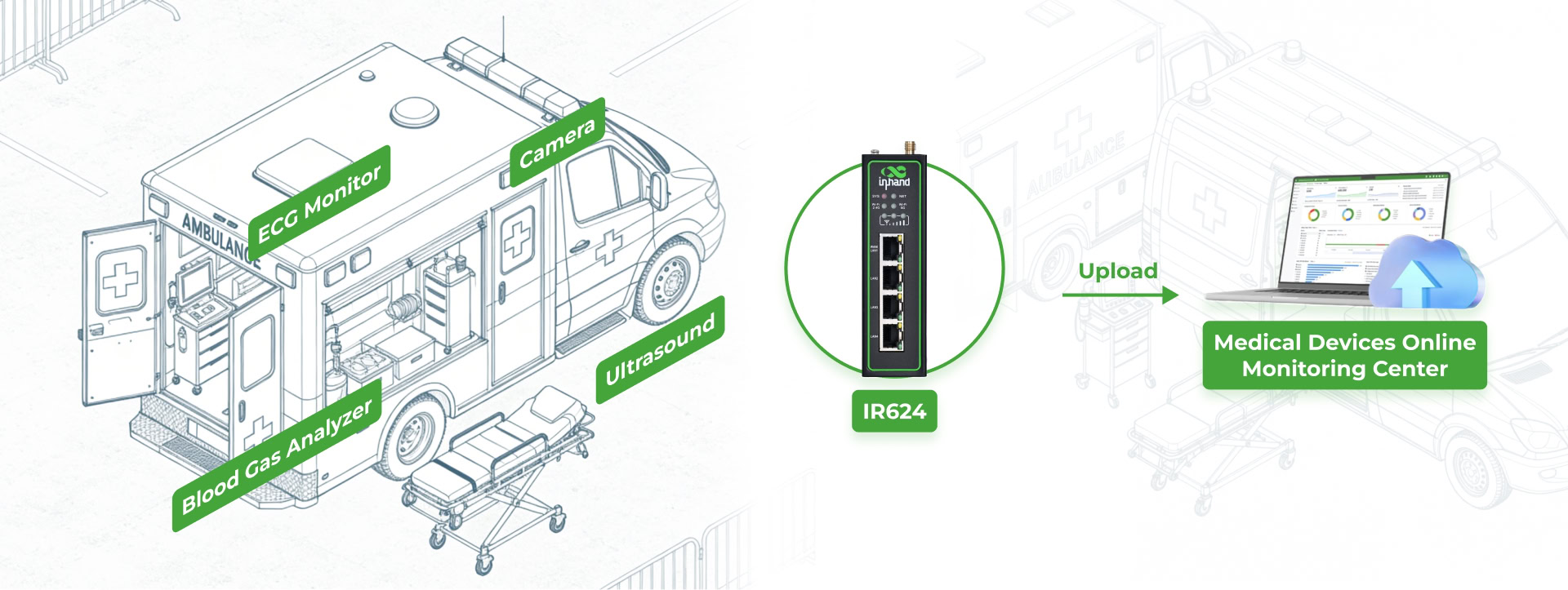
The medical devices on the ambulance can be connected to the IR624 via either a wired or Wi-Fi connection. The IR624 transmits the series of test data, including blood tests, electrocardiograms, and ultrasound scans completed by the patient in the ambulance to the hospital in real-time at millisecond speeds through the high-speed 5G network. Hospital experts can conduct synchronous consultations, formulate rescue plans, and make preoperative preparations, thus eliminating the wait time in the emergency department. To ensure the security of data transmission, the IR624 supports various VPNs to ensure secure data transmission and protect patient privacy.
Benefits
Network
Capability
Policies
Ensuring Network
Management
Futured Products
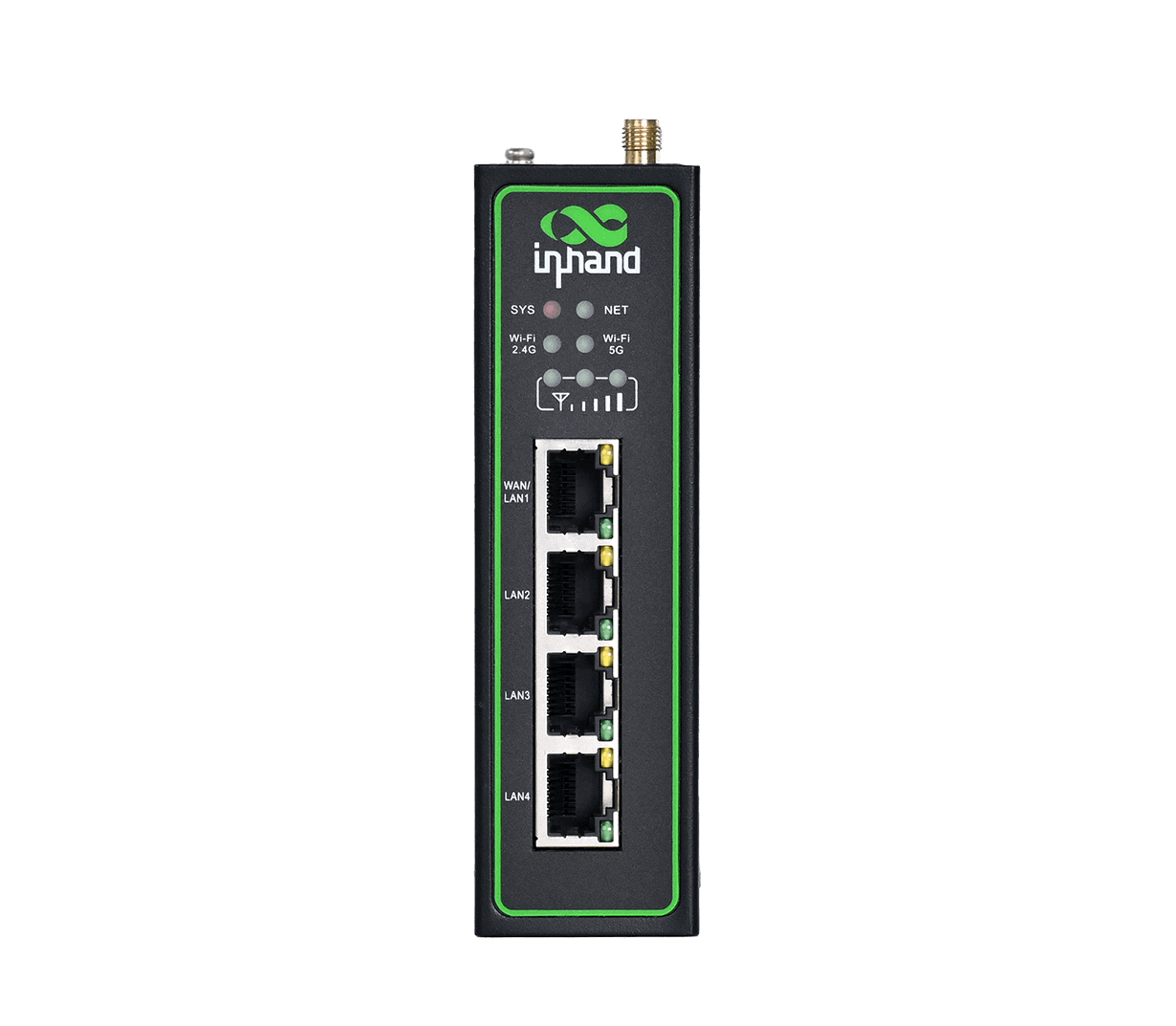
IR624
Industrial 5G router, DL 3.4Gbps, Wi-Fi, VPN, cloud-managed, wide voltage, fanless metal design.
5G Ready
Up to 3.4Gbps DL, 4G/3G fallback
Always On
Link backup, dual SIM, watchdog
Security
Multi-layer VPN, firewall, 802.1X
Cloud
DeviceLive remote monitoring