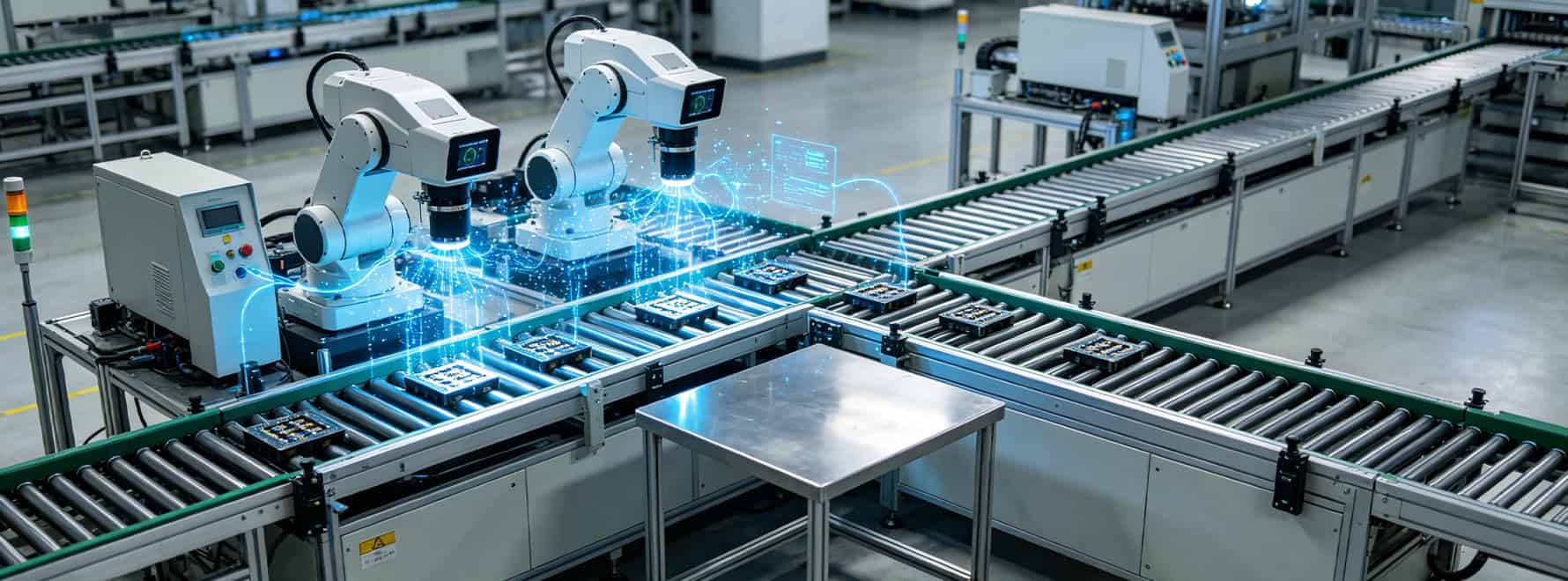
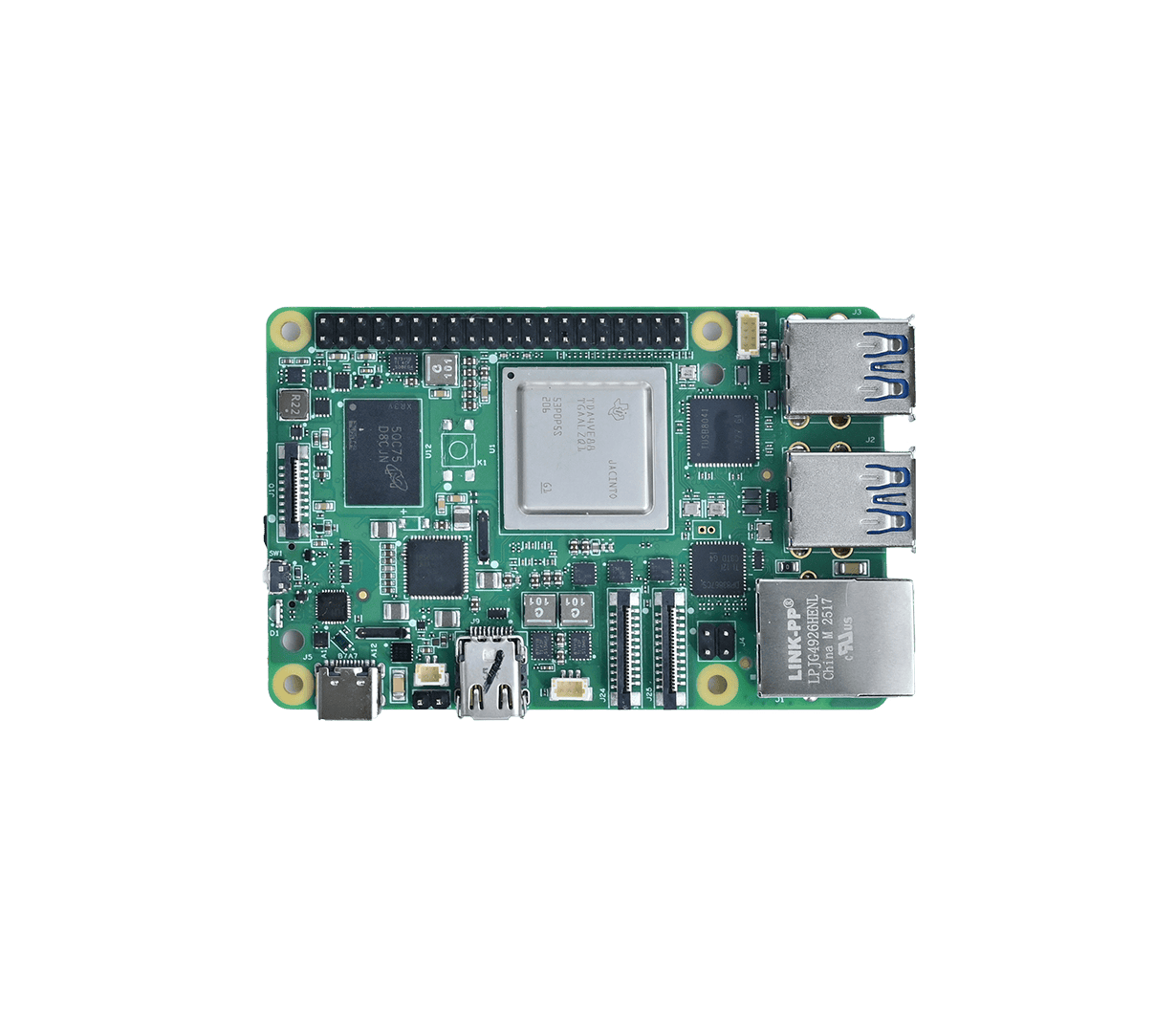
Accelerate the development of compact visual-inspection systems with on-device AI. InHand Mo-series AI single-board computers provide a ready Linux and AI runtime environment for image capture, model inference, and result output, helping developers move faster from a trained model to an equipment prototype.
Background
Manufacturers are adopting machine vision to improve inspection consistency and reduce reliance on repetitive manual checks. Yet every inspection task is different: cameras, lighting, product materials, defect definitions, and line speeds all affect model performance. Building a working system therefore requires more than an AI model. Developers must integrate image capture, edge inference, result output, and application logic within the available equipment space. A compact, model-ready computing platform can simplify this early integration and validation work.
Customer Requirements
More Consistent Inspection
Manufacturers need a repeatable way to support visual checks while reducing dependence on the pace, attention, and availability of manual inspection.
Fit Within Equipment Constraints
The computing platform must fit within inspection stations or embedded equipment and connect to the cameras, displays, networks, and peripherals required.
Adaptation to Changing Tasks
Inspection targets vary by product, material, defect definition, and line condition, so developers need room to tune models and application logic for each task.
Solution
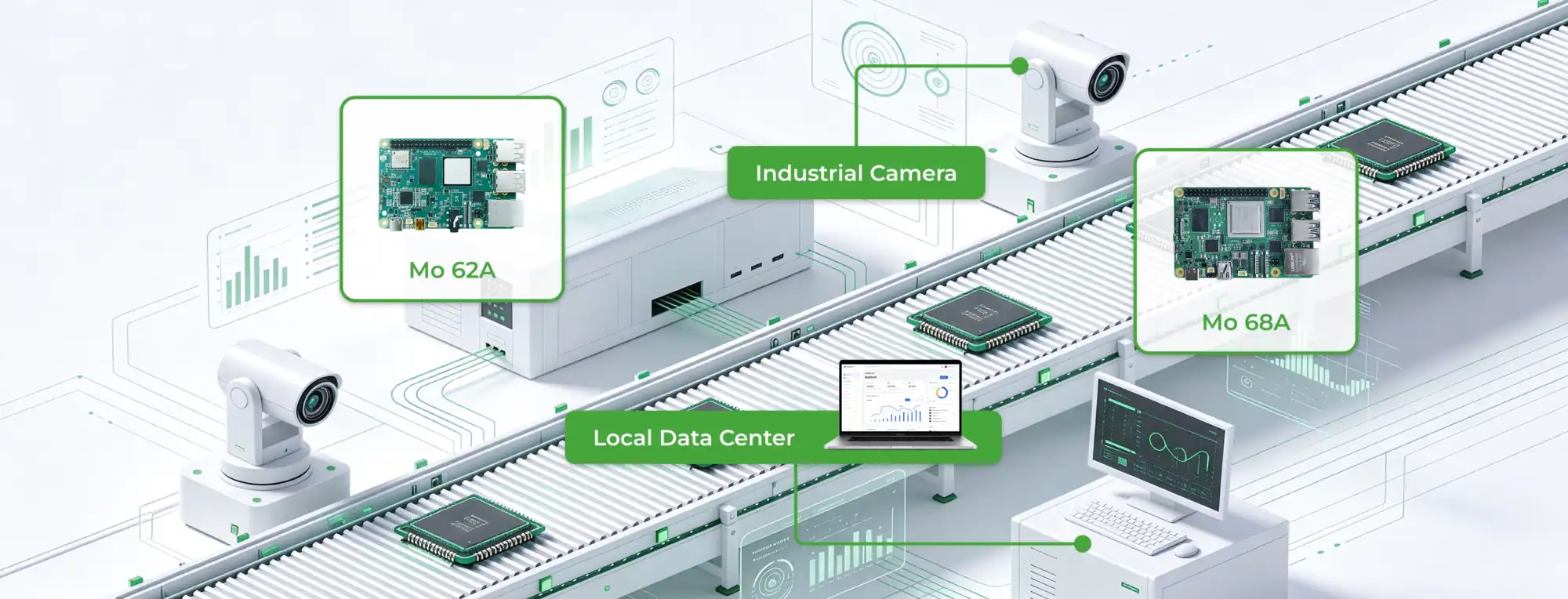
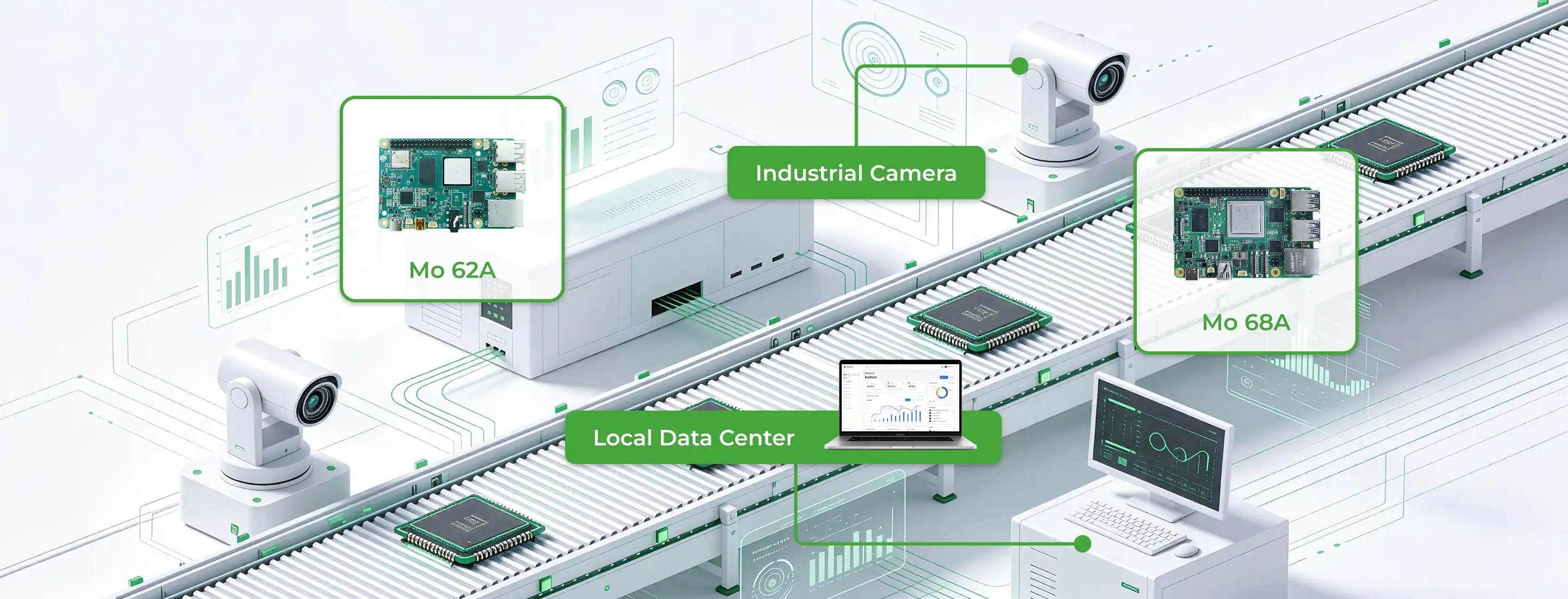
The visual inspection solution combines a camera and lighting setup, an InHand Mo-series AI single-board computer, and customer-developed inspection software. Mo receives image or video input, runs compatible detection or classification models locally, and outputs results for recording, review, alerts, or downstream control logic.
Mo provides Debian 13, TI TIDL, OpenCV, GStreamer, and support for TFLite and ONNX models. This prepared environment reduces initial setup work and helps developers validate the vision pipeline before completing application-specific integration. Each inspection project still requires suitable image data, camera and lighting design, model training, threshold tuning, and testing under actual line conditions.
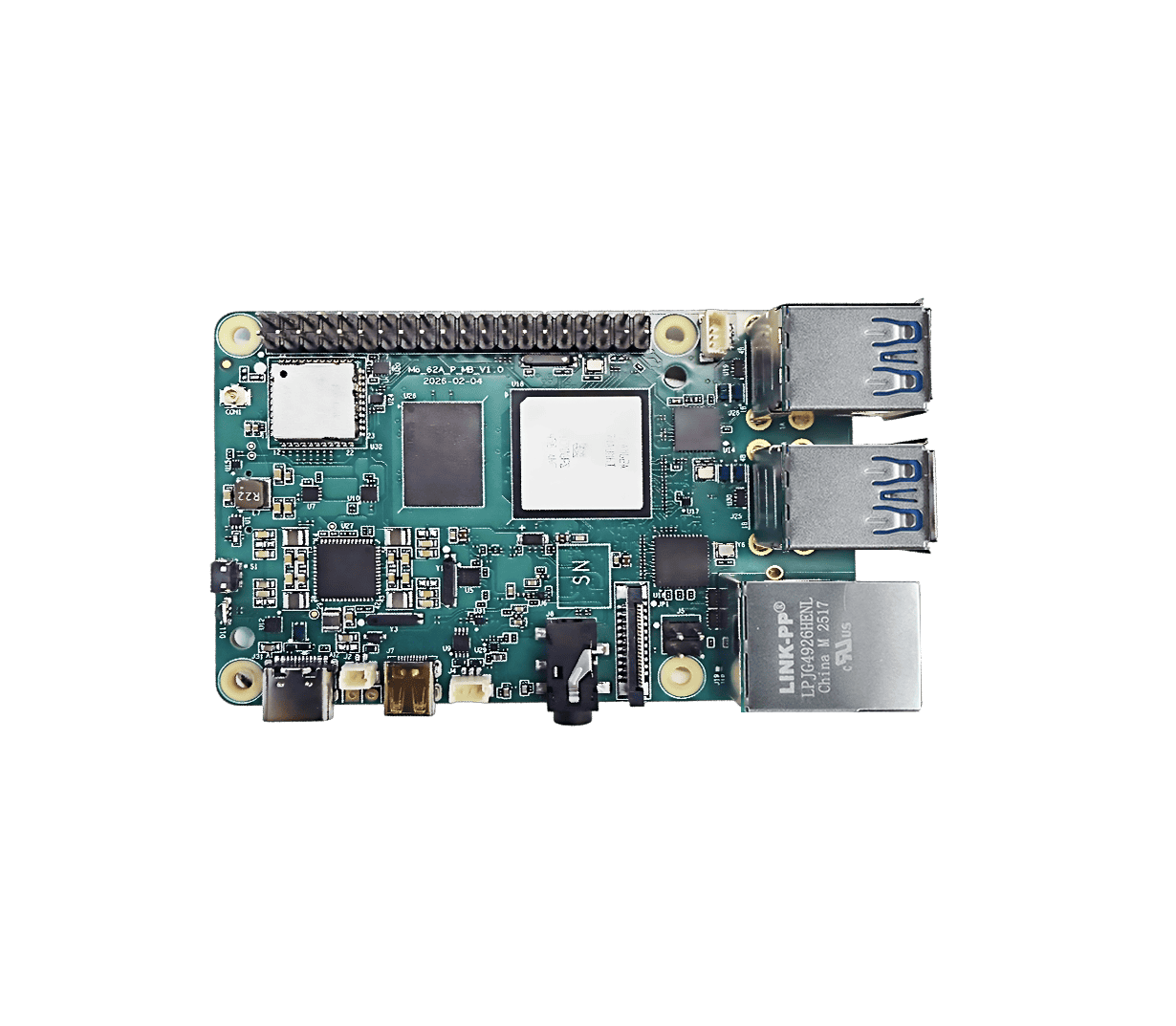
Mo 62A provides 2 TOPS for lightweight, typically single-camera validation. Mo 68A provides 8 TOPS, USB 3.0, and additional expansion for applications requiring more processing headroom. Performance depends on the model, image resolution, frame rate, and inspection requirements.
Benefits
Faster Prototype Validation
A prepared Linux and AI environment helps teams move more quickly from a trained vision model to an edge-based inspection prototype.
Lower Integration Effort
The compact SBC and common interfaces reduce the platform work involved in connecting vision, display, network, and application components.
Reusable Development Foundation
Teams can reuse the same development foundation while adapting models, vision pipelines, and result handling for different inspection projects.


 Ask AI Anything