Industrial 5G Routers Are Not Just for “Getting Online”: Understanding the Full Path from Field Devices to the Cloud
Blog
Using InHand IR624 as an example to unpack the engineering path from legacy field devices to secure, manageable cloud connectivity
The real question is not whether a device can connect
Industrial 5G routers are often described in the simplest possible way: they help field equipment get online. That description is true, but it is also incomplete. In a real industrial deployment, connectivity is not a one-time action. It is a continuous path that has to survive weak signals, legacy protocols, remote maintenance needs, security boundaries, and the daily operational pressure of keeping equipment visible.
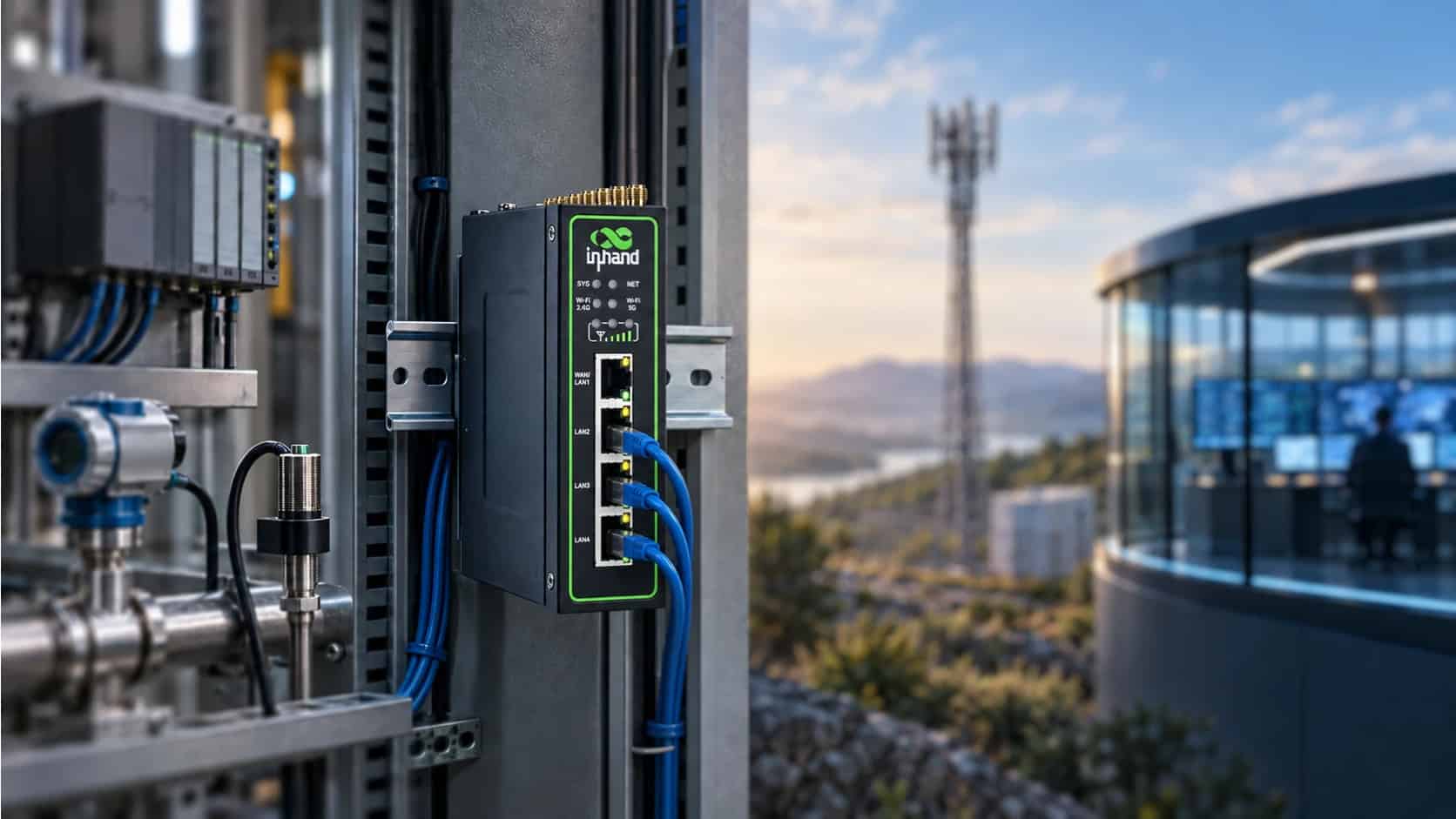
A field device does not become cloud-ready just because a SIM card is inserted somewhere in the cabinet. The data path usually starts with a PLC, meter, controller, sensor, edge computer, or other piece of operational equipment. It then moves through Ethernet or serial interfaces, protocol adaptation, cellular access, VPN tunnels, access policies, cloud management, and business applications.
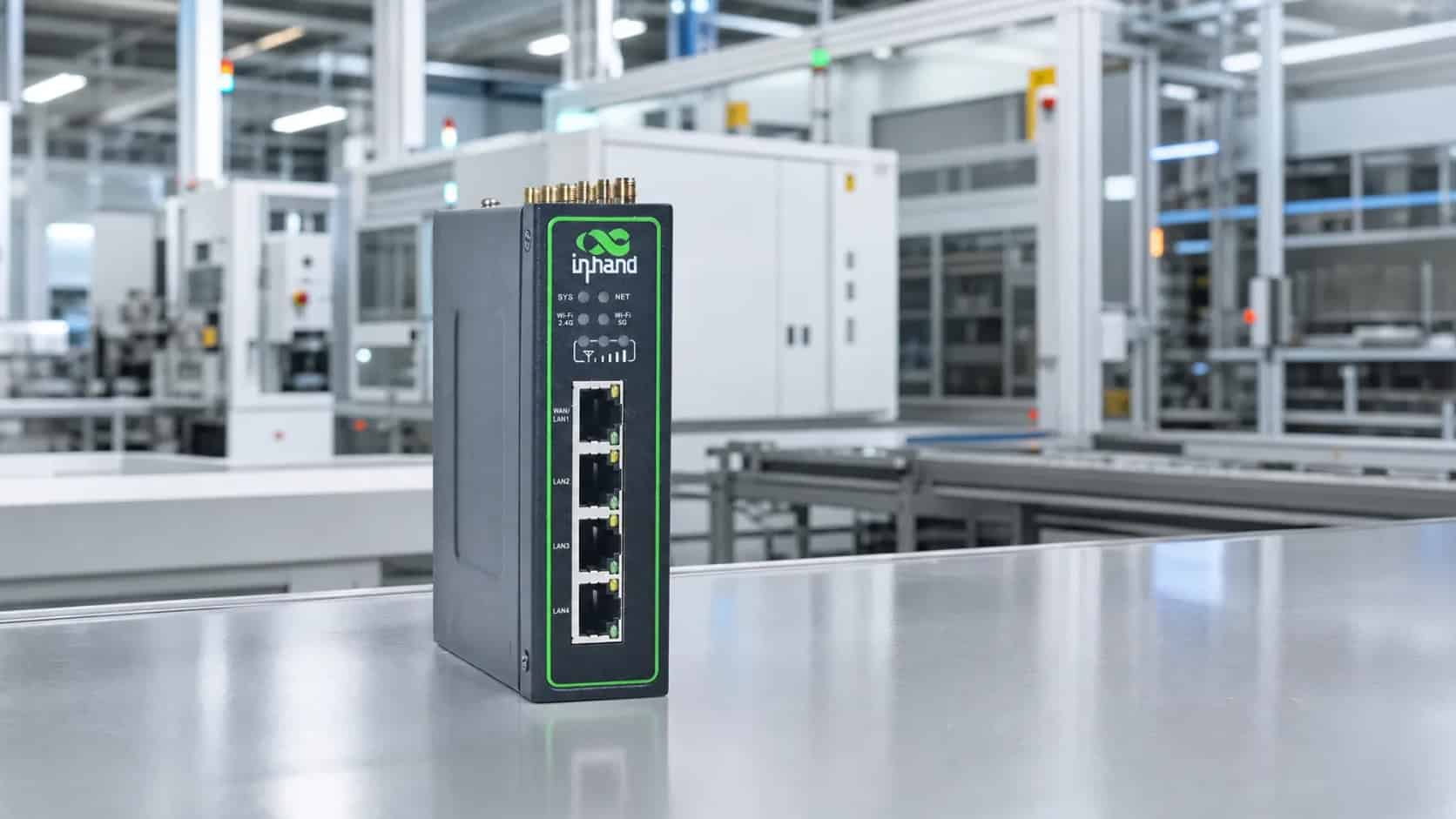
This is the right lens for understanding products such as InHand IR624. The value of an industrial 5G router is not limited to radio access or port count. Its deeper role is to organize many engineering concerns into one deployable communication layer: field access, protocol bridging, wide-area connectivity, secure remote access, and fleet-level operations.
Field devices do not all speak the language of IP
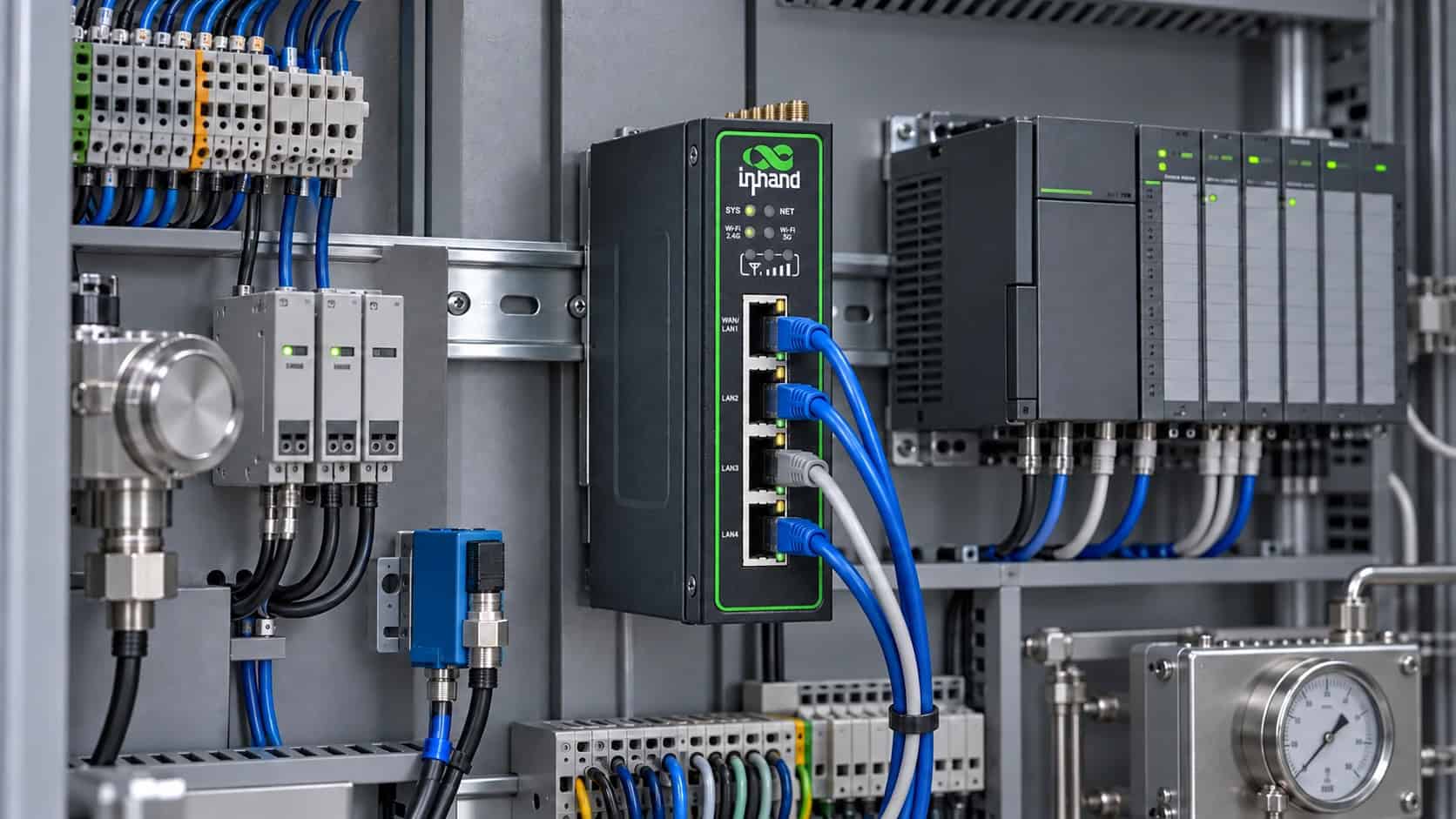
The first challenge comes from the field itself. Newer industrial assets may already support Ethernet and IP-based communication, but many reliable and business-critical devices still communicate through RS232, RS485, or Modbus RTU. These assets often have long service lives, and replacing them simply because a cloud platform is being introduced is rarely practical.
This is where an industrial router begins to differ from a conventional networking device. A normal router mainly forwards traffic between IP networks. An industrial router also has to deal with the physical and protocol reality of the site. IR624 supports Ethernet access as well as RS232/RS485 serial connectivity, with mechanisms such as TCP/UDP transparent transmission and Modbus RTU to Modbus TCP conversion.
That capability matters because it lets existing equipment participate in modern remote monitoring and data acquisition architectures without forcing a full replacement cycle. The router becomes a practical bridge between long-lived operational technology and newer IP- and cloud-based systems.
Cellular access provides reach; link strategy provides availability
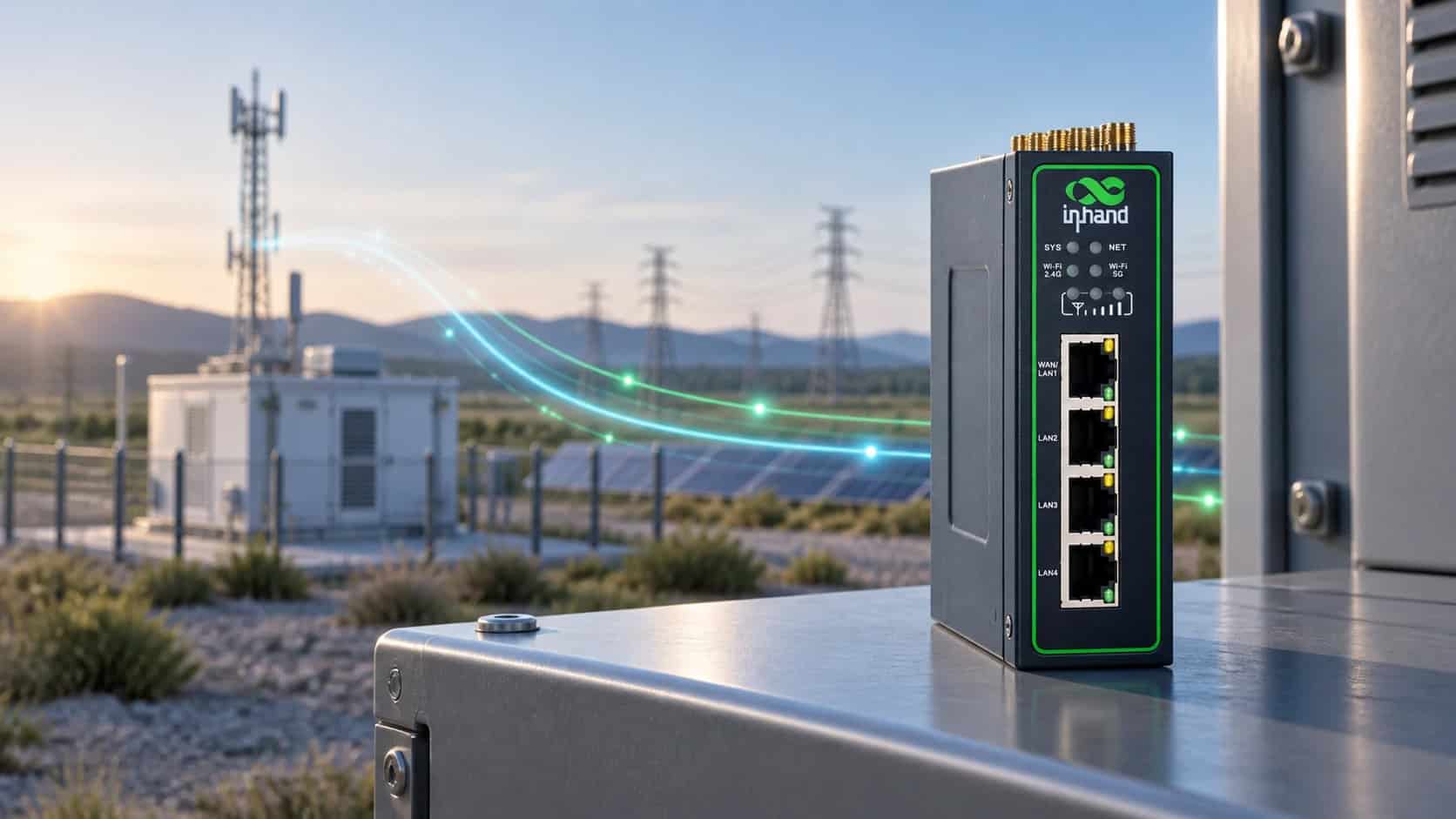
5G is often associated with peak bandwidth, but industrial communication is rarely judged by a single speed test. The more important question is whether the link remains usable over months and years of field operation. Many sites do not have fixed broadband. Some are mobile. Some are temporary. Some are remote enough that sending a technician to check a network issue is itself a major cost.
Cellular access solves the coverage and deployment problem, but it also introduces variables: signal fluctuation, operator coverage differences, SIM issues, base station handover, and environmental interference. For that reason, an industrial 5G router needs more than a working modem. It needs link detection, automatic reconnection, dual-SIM failover, interface backup, and watchdog recovery.
IR624 combines 5G/4G cellular access with dual-SIM design, link detection, and self-recovery features. In engineering terms, this is a response to a simple field reality: network instability cannot always be eliminated, so the system must be able to detect problems and recover as much as possible without human intervention.
Security cannot be bolted on after connectivity is finished
Once field devices are reachable through a wide-area network, the security boundary changes. Equipment that used to communicate inside a local environment may now need to be accessed by remote engineers, cloud platforms, SCADA systems, or maintenance services. If the deployment focuses only on making the connection work, the field network may become too exposed.
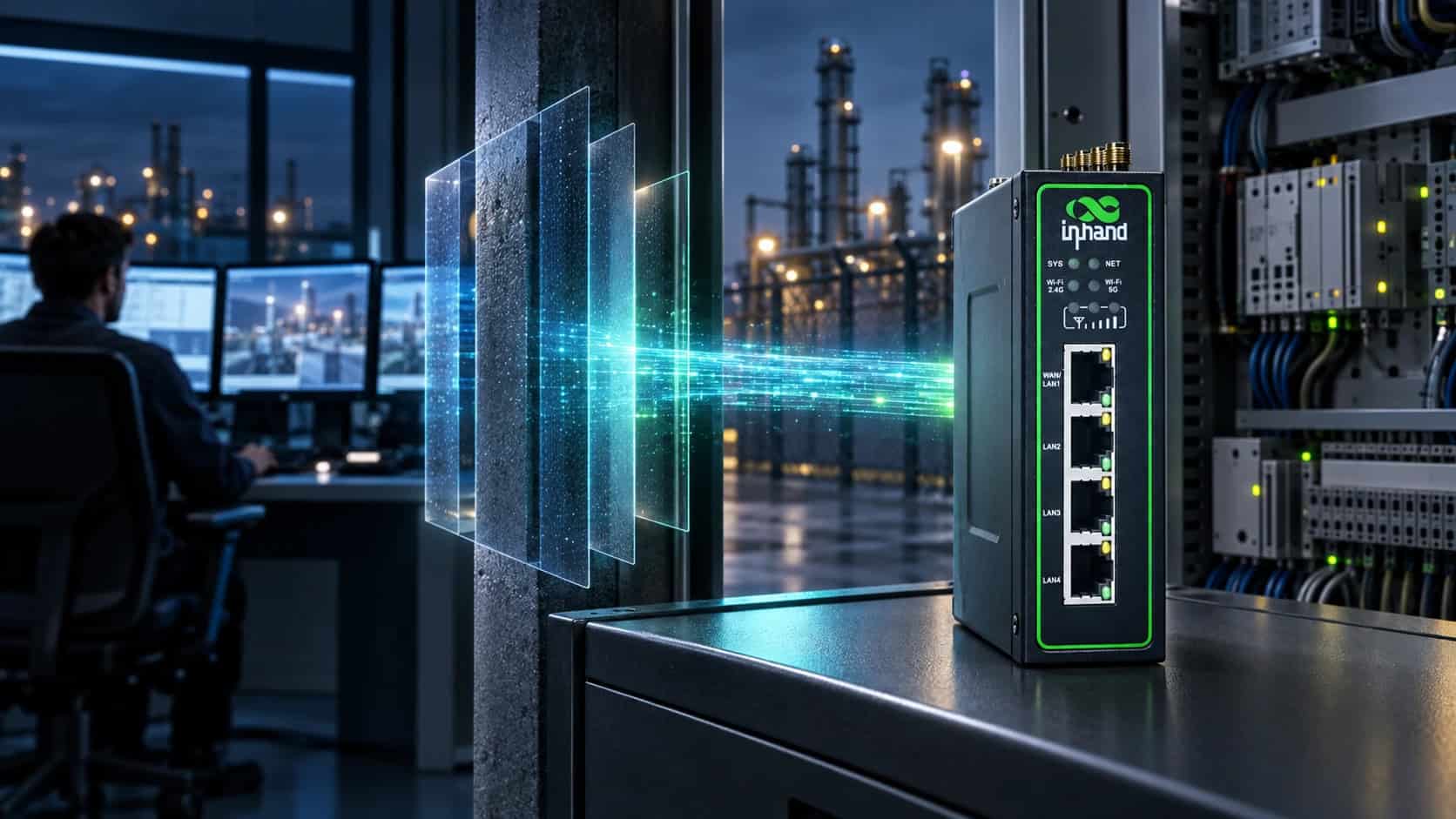
A secure industrial connectivity path has to be layered. VPNs create encrypted tunnels across public networks. Firewalls and ACLs reduce the allowed traffic surface. NAT and port mapping handle addressing. Policy routing helps separate different traffic paths. Authentication and access control ensure that remote access is not merely possible, but bounded.
IR624 includes VPN, firewall, ACL, NAT, port mapping, policy routing, and 802.1X-related capabilities. Seen one by one, these are networking features. Seen as a system, they address the central tension of industrial remote access: the site must be reachable, but it must not become an open doorway.
Cloud management turns connectivity into an operating model
There is a big difference between connecting one device and managing a fleet. During a pilot project, engineers can log in to individual routers, check signal strength, update configuration, and collect logs manually. At dozens or hundreds of sites, that model breaks down quickly. Configuration consistency, remote diagnostics, firmware maintenance, alerts, and status visibility become part of the network design.
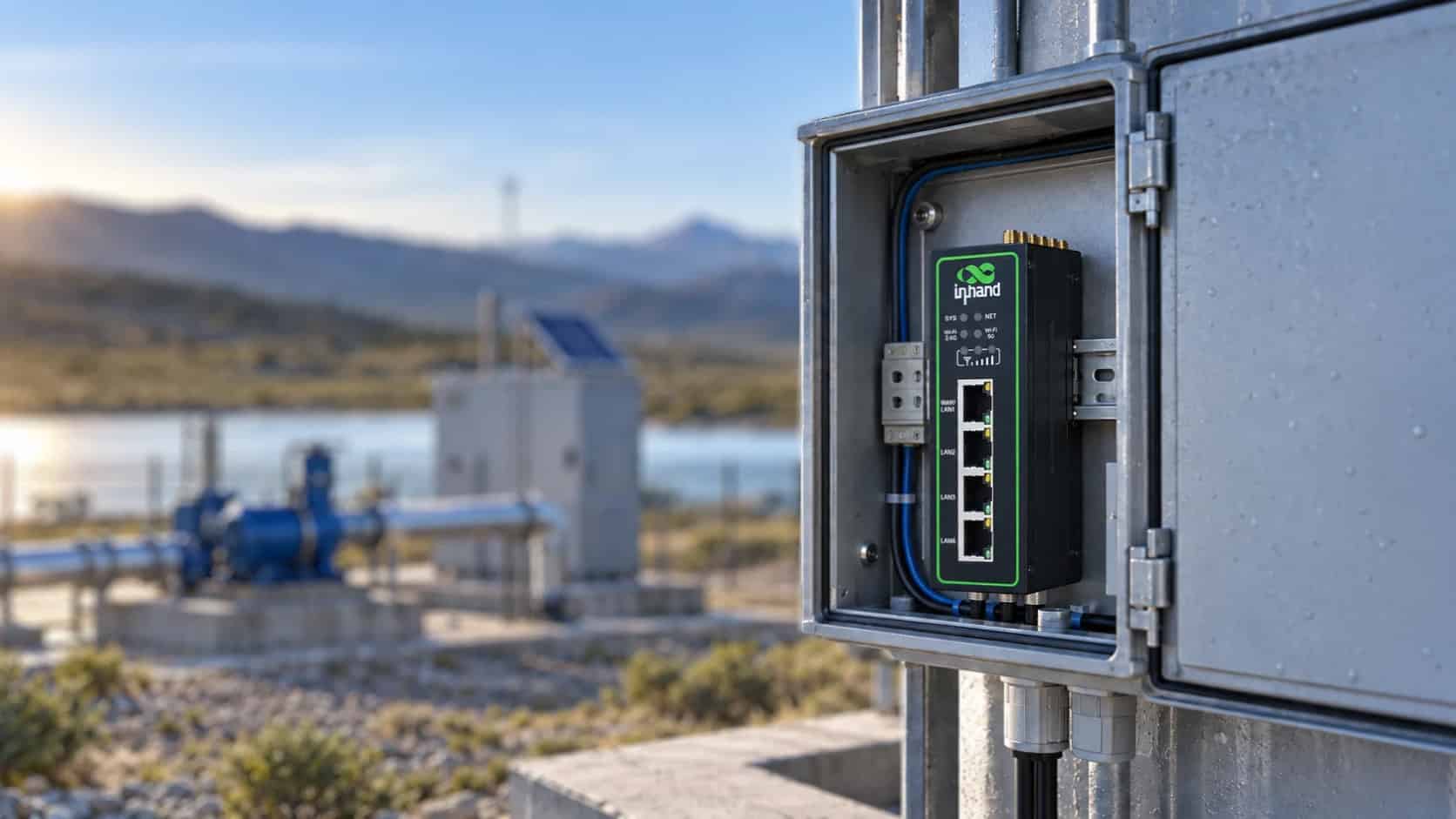
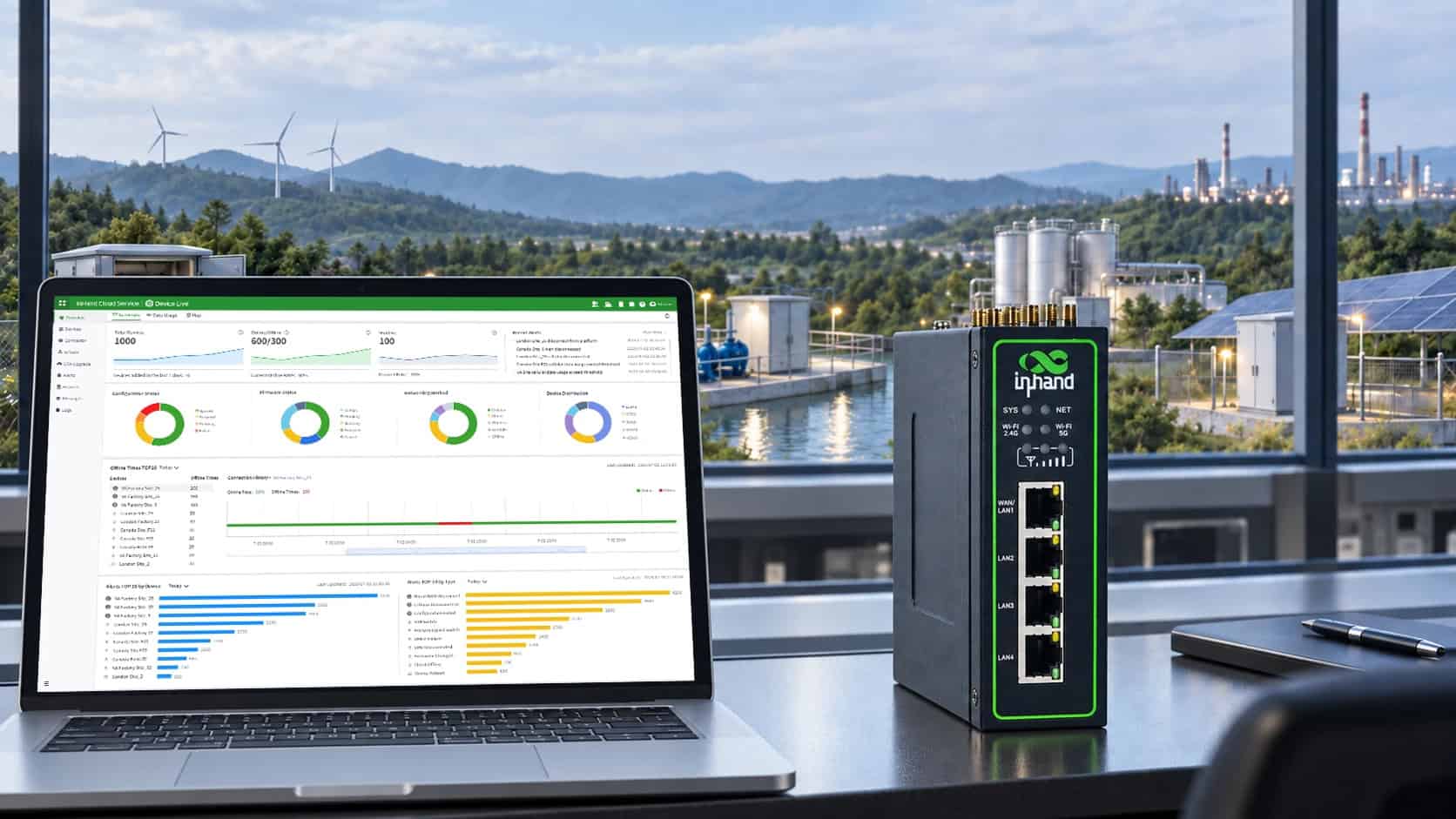
This is why cloud management belongs in the discussion of industrial routers. IR624 can be managed through InHand DeviceLive, allowing routers to be viewed and maintained remotely. The router is no longer just a box in a cabinet; it becomes a managed field node in a larger operational system.
From an engineering point of view, cloud management helps close the troubleshooting loop. When a site goes offline, the team wants to know whether the issue is cellular signal, SIM status, WAN failover, local device behavior, VPN status, or business application traffic. Without remote visibility, many of these questions turn into guesswork. With a management platform, the communication layer becomes more observable.
The end-to-end path can be understood in five layers
A practical way to understand industrial device-to-cloud connectivity is to divide the path into five layers:
Field device layer: PLCs, meters, sensors, IPCs, controllers, or other equipment connect through Ethernet, RS232, RS485, or similar interfaces.
Edge adaptation layer: transparent transmission and protocol conversion allow legacy devices to enter IP-based communication systems.
Wide-area access layer: 5G/4G, WAN, dual SIM, and interface backup provide external connectivity for different site conditions.
Secure connection layer: VPN, firewall, ACL, NAT, policy routing, and authentication narrow the access boundary.
Operations layer: cloud management, logs, alerts, diagnostics, and remote configuration support long-term fleet operation.
These layers are not just a product checklist. They are a responsibility model for the communication path between field equipment and business systems. IR624’s role is to bring these responsibilities into a rugged, deployable industrial router form factor.
Why this matters now
Industrial digitalization is moving beyond basic data collection. Companies want remote monitoring, predictive maintenance, edge analytics, cloud dashboards, digital twins, and faster field service. All of these higher-level capabilities depend on a simpler prerequisite: field data must move reliably and securely from the site to the system that can use it.
If the connectivity layer is improvised, every layer above it becomes fragile. Intermittent data makes analytics unreliable. Unstable remote access limits service efficiency. Unclear security boundaries delay deployment. Poor fleet visibility increases operating cost. In that sense, an industrial 5G router is no longer a peripheral network accessory; it is part of the foundation for scalable industrial applications.
That is why evaluating a product such as IR624 should go beyond asking how fast it can connect. Better questions are: Can it handle diverse field interfaces? Can it recover from network fluctuation? Can it contain remote access inside clear security boundaries? Can it be managed at scale? Those answers determine whether an industrial connectivity project can move from pilot to production.
Conclusion: the router is becoming part of the industrial system
In the traditional view, a router is a networking device. In industrial digitalization, it increasingly behaves like part of the field system itself. It connects not only two networks, but also old and new equipment, serial and IP protocols, cellular coverage and secure tunnels, local operations and cloud platforms.
The significance of IR624 is not that each function can be listed as an isolated selling point. It is that these functions work together to form a practical industrial communication path. For teams building remote monitoring, edge data collection, equipment maintenance, or cloud-connected industrial services, the real goal is not just to put devices online. The goal is to create a continuous, secure, and manageable path from the field to the cloud.


 Yapay Zekaya Her Şeyi Sor