A First Look at VR624 — Simplifying In-Vehicle Connectivity
Şirket Haberleri
Connecting a moving vehicle to the network may sound as simple as installing a router.
In practice, it is rarely that straightforward. As a vehicle travels, it crosses different base stations and operators, while metal bodies, vibration, wide temperature swings, and power fluctuations can all affect connectivity. On board, ticket machines, surveillance systems, and passenger Wi-Fi demand stable bandwidth. And when a few vehicles grow into dozens or hundreds, the question becomes how to manage them all.
That is the real challenge of in-vehicle networking. It is not just about whether a network is available; it is about keeping connections stable and reliable in a moving, demanding environment, and making every vehicle easy to monitor and manage.
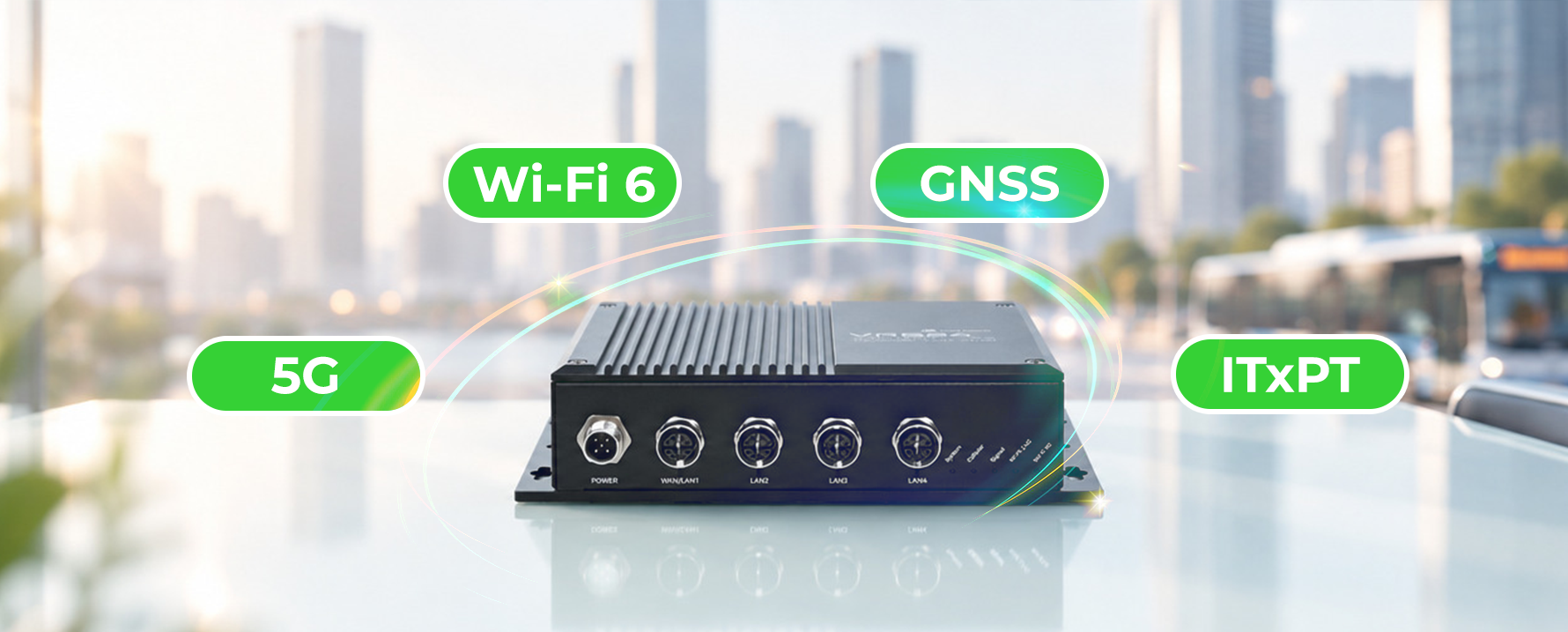
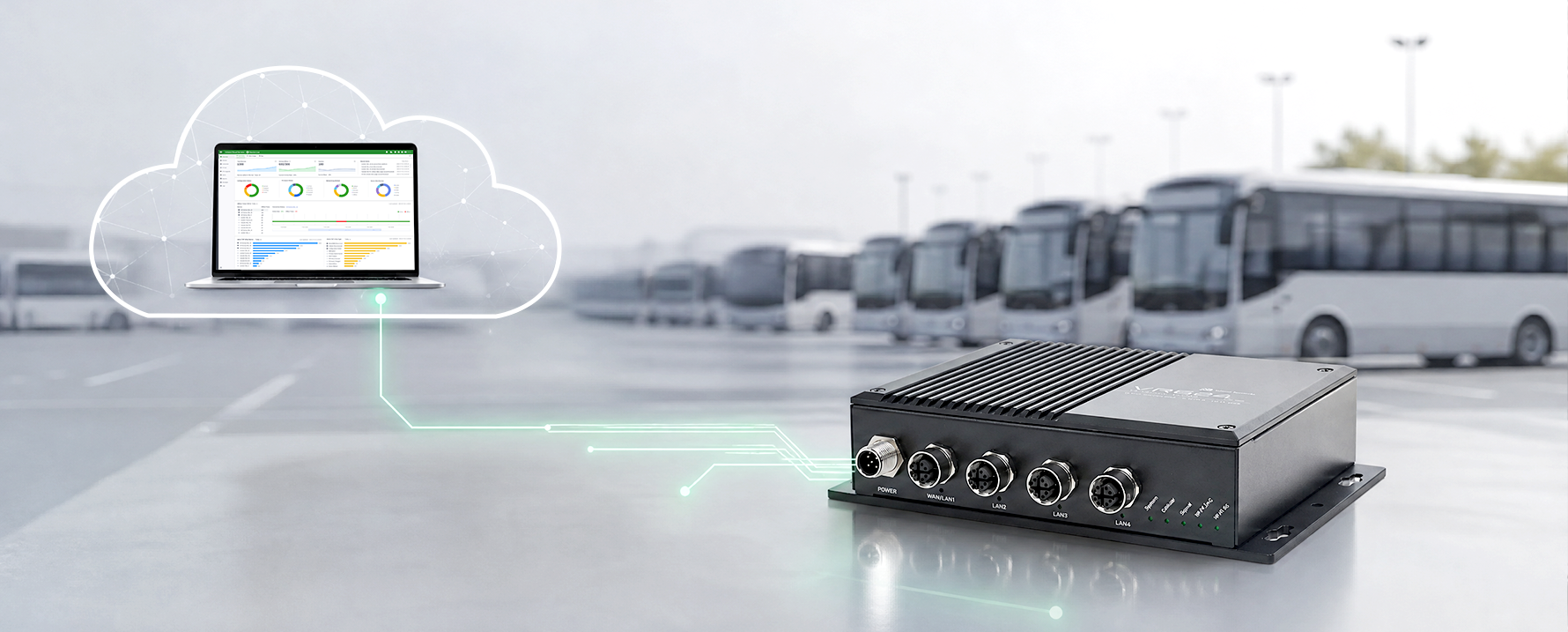
InHand Networks recently launched the VR624 5G vehicle router. Engineered for in-vehicle networking with 4× M12 X-code Gigabit Ethernet ports and DC 9-48 V wide-range power input, it brings high-speed 5G, Wi-Fi 6, multi-constellation GNSS positioning, and industrial-grade reliability into a single device — delivering more stable, more secure mobile connectivity for public transit, emergency vehicles, RV rentals, and unmanned vehicles.
The Real Challenge of In-Vehicle Networking Is Motion
As vehicles move, base stations keep changing and signal strength fluctuates; metal bodies and vehicle structures can weaken antenna reception. Meanwhile, in-vehicle devices are often installed in cabins and enclosures where vibration and temperature variation are pronounced, and power supply can fluctuate as well.
None of these is difficult on its own. Together, they test the stability of connectivity, the reliability of the hardware, and the quality of installation. To support an entire fleet, a router must withstand the mobile environment from installation and connection through long-term operation.
As deployments scale from a few vehicles to many, the challenge changes again — from connecting a single vehicle to managing an entire fleet.
Fast Connectivity That Stays Online While Moving
The VR624 supports 5G NR SA/NSA with downlink speeds up to 3,4 Gbps, and is backward compatible with 4G LTE and WCDMA, providing gigabit-class transmission for real-time video, telemetry, and fleet communications.
For on-board access, Wi-Fi 6 runs concurrently on 2.4 GHz and 5 GHz with aggregate throughput up to 3000 Mbps, supporting passenger Wi-Fi, vehicle-mounted MDVRs, and ticket vending machines simultaneously.
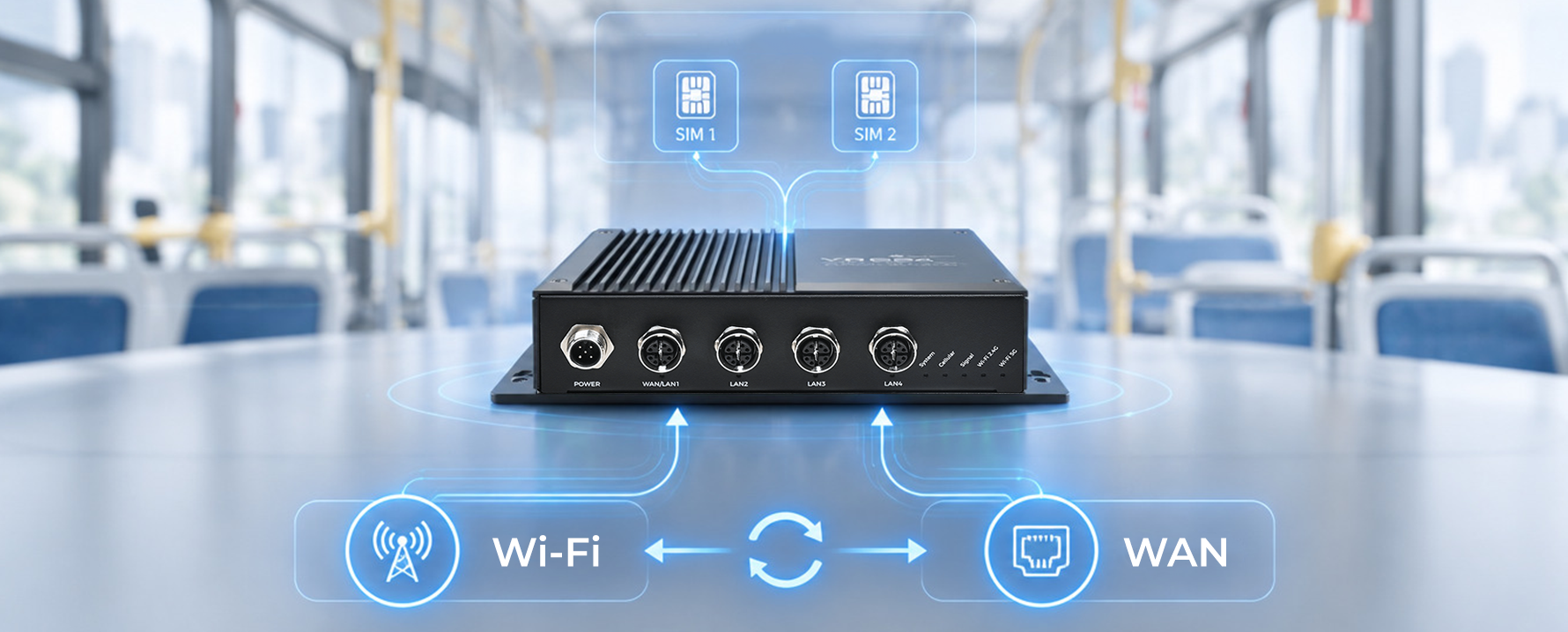
Keeping the connection alive is essential in vehicles. The VR624 features a dual Nano-SIM slot (with optional eSIM) and intelligent switching based on flow thresholds, dial failure, abnormal periods, and detection failure. Cellular and wired WAN links can be configured for primary/standby, with link monitoring, auto-redial on disconnection, and a hardware watchdog to help the device recover on its own while in motion.
Built Rugged to Keep Running
Vehicle routers are often installed in cabins and enclosures where vibration and electromagnetic interference are common, facing temperature swings, power fluctuations, and continuous operation over time.
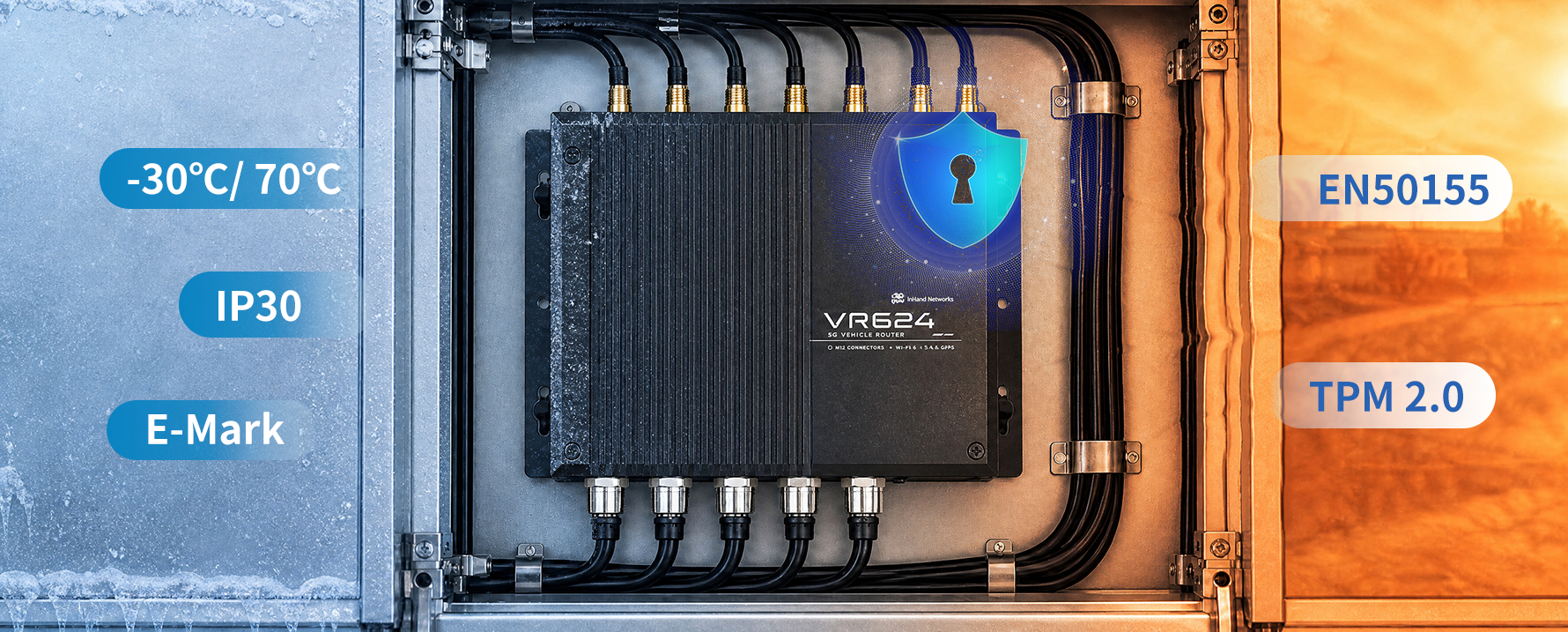
The VR624 uses a metal enclosure with fanless passive cooling, an operating range of -30 °C to +70 °C (-22 °F to +158 °F), an IP30 protection rating, and DC 9-48 V wide-range power input with reverse-polarity and over-current protection.
Its wired interfaces use 4× M12 X-code vibration-resistant connectors, designed for mobile environments. The product is certified to CE, E-Mark (ECE R10/R118), FCC, PTCRB, and ITxPT standards, and meets EN 50155 railway-grade EMC and EN 45545 fire-safety requirements.
For fleet security, the VR624 integrates a TPM 2.0 hardware encryption chip with stateful firewall, VPN (IPsec, L2TP, OpenVPN, WireGuard), and access control for multi-layer protection.
Know Where Every Vehicle Is
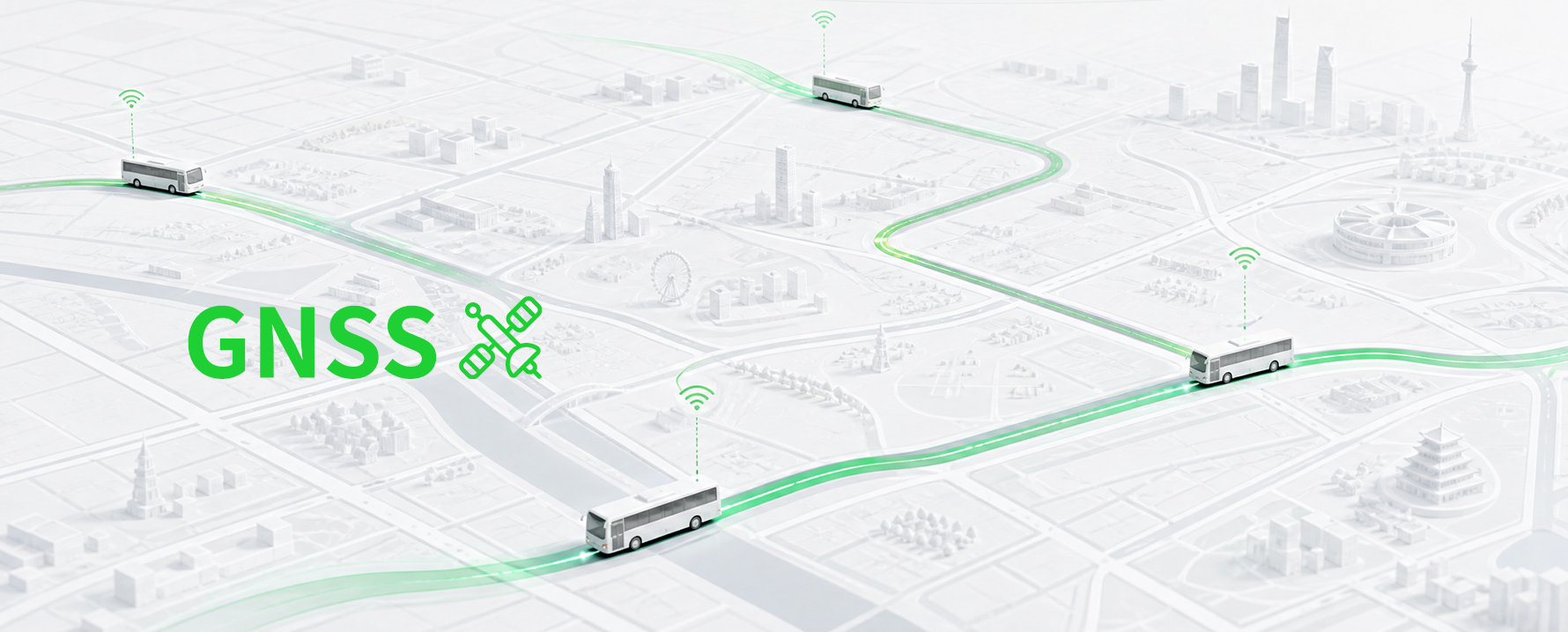
Fleet operations are about more than connectivity — they are about location. The VR624 integrates multi-constellation GNSS (GPS, BDS, Galileo, GLONASS, QZSS) with positioning accuracy better than 1.5 m and 10 Hz navigation updates.
Location-based services enable real-time vehicle tracking, route optimization, geofencing alerts, and historical route playback, keeping dispatch in view of every vehicle at all times.
The More Distributed the Fleet, the More It Needs Centralized Management
As deployments grow from a few vehicles to dozens, hundreds, or more, operations shift from maintaining one device at a time to centralized fleet management. The VR624 connects to InHand DeviceLive platform, bringing thousands of distributed in-vehicle routers into one unified environment.
Operators can view device status, signal strength, and data usage in real time, deploy configurations and upgrade firmware remotely, and troubleshoot with tools such as Ping, Traceroute, and packet capture — without visiting each vehicle. Alerts provide instant notification of critical events.
Different Vehicles, Similar Connectivity Needs
Although the scenarios differ, different vehicles are converging on the same core needs: reliable high-speed connectivity, rugged hardware, accurate positioning, and centralized remote management.
In public transit, the VR624 provides high-speed connectivity for ticket vending machines and vehicle-mounted MDVRs, along with vehicle tracking and passenger Wi-Fi;
In emergency vehicles, it delivers mission-critical reliability and ultra-low latency for police, fire, ambulance, and mobile command vehicles, supporting emergency communications and telemedicine;
In RV rentals, Wi-Fi 6 supports simultaneous high-bandwidth use for streaming, video calls, and remote work;
In unmanned vehicles, 5G connectivity supports route optimization and real-time tracking for roboshuttles and robosweepers, improving fleet efficiency.
Making In-Vehicle Connectivity Simpler and More Reliable
The VR624 is more than a router placed in a rugged enclosure. It starts with the realities of in-vehicle connectivity, rethinking how a router should handle motion and vibration, keep connections alive, and support the positioning and management of an entire fleet.
By combining high-speed 5G, Wi-Fi 6, multi-constellation GNSS, industrial-grade reliability, and cloud management in a single device, the VR624 reduces unnecessary complexity in in-vehicle networking, making every moving vehicle easier to connect and simpler to manage over the long term.
InHand Networks will continue to build edge-connectivity products and services around real-world in-vehicle requirements. When the vehicle moves, the connection should follow.


 Yapay Zekaya Her Şeyi Sor